Send Sheikh Hasina back: Bangladesh’s ‘red line’ for PM Rahman’s visit
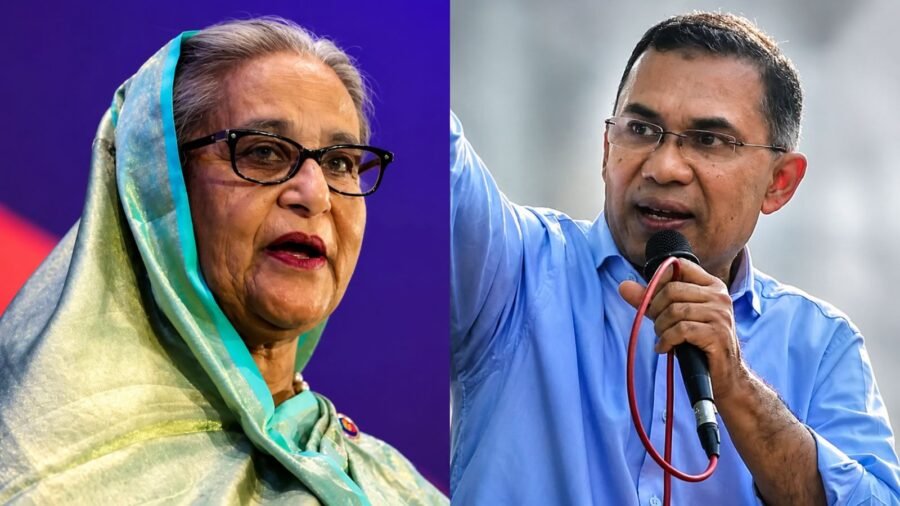
The Bangladesh government said on Sunday that a “propitious environment needs to be created” for Prime Minister Tarique Rahman’s visit to India.
“To this end, we have requested the Indian authorities to expeditiously act on our request to extradite Sheikh Hasina and other fugitive criminals, and to hand over to Bangladesh the accused killers of Shaheed Sharif Osman Hadi in compliance with our bilateral extradition treaty,” the Bangladesh Foreign Ministry said in a statement.
While many in Dhaka see this as a ‘red line’, there is a sense in New Delhi that it needs to convey the “next steps” and give a “cogent response” to the Bangladesh Government’s request for extradition. The extradition request was first moved by the interim government led by Prof Muhammad Yunus in 2024, and has been reiterated by the BNP government which assumed office in February this year.
Delhi had proposed August 21 as a possible date for the visit and what is said to have queered the pitch was the press conference by ousted former Prime Minister Sheikh Hasina on August 5. The Tarique Rahman government has clearly spelt out that it needs a response from the Indian government.
The Indian government said that it had “no role” in Hasina’s press interaction and did not endorse her views. At the presser, she had announced her plans to return to Bangladesh in December this year and even said that she might be killed.
The Bangladesh Foreign Ministry made it official that the two sides have been discussing a possible visit. “Officials of Bangladesh and India have been in touch with each other for several weeks on the possibility of a bilateral visit by Prime Minister Tarique Rahman to India,” the ministry said on Sunday.
“However, this process was vitiated by the open press interaction in New Delhi on 5th August by Sheikh Hasina who has been convicted by the International Crimes Tribunal for committing crimes against humanity. We have made our position clear on this matter,” the Bangladesh Foreign Ministry said. Hasina has been sentenced to death in Bangladesh courts, and her party Awami League has been banned.
Story continues below this ad
“We reiterate that we will continue to pursue our ‘Bangladesh First’ policy to promote friendly bilateral relations with other countries, including our neighbours, on the basis of sovereign equality, national dignity, non-interference in each other’s internal affairs and mutual benefit,” the Bangladesh Foreign Ministry said.
New Delhi and Dhaka have been discussing a possible visit by Rahman since early June, but reports of Bangladesh illegal immigrants being detained and pushed back had soured the atmosphere then. Rahman went to China for his first bilateral visit – which was seen as a signal to Delhi as well.
While the proposal of August 21 as the date for the visit was being discussed, Dhaka came to know that Hasina was going to address the Press at the Foreign Correspondents’ Club of South Asia in New Delhi. Bangladesh Foreign Minister Khalilur Rahman called up NSA Ajit Doval and lodged a protest. Bangladesh PM’s Foreign Affairs Advisor Humayun Kabir also met Indian High Commissioner Dinesh Trivedi and raised the issue.
Hasina’s interaction finally took place at FCC and was attended by both foreign and Indian journalists – prompting a sharp reaction from Dhaka.
Story continues below this ad
The fact that Hasina was allowed to interact with the media was seen by Bangladesh as having the blessings of the Indian government. New Delhi, however, maintained that it had “no role” in organising the interaction and it “did not endorse” Hasina’s statements.
Rahman subsequently met Trivedi and it was clearly conveyed that Hasina’s extradition is a core issue for the Bangladesh government. Dhaka made it clear that unless New Delhi gives a cogent response on the next steps to be taken for her extradition, it will be difficult for Rahman to visit India.
India’s external intelligence agency, R&AW (Research and Analysis Wing) chief Parag Jain visited Bangladesh on August 9 and met top intelligence and security officials in Dhaka. He was told by his Bangladeshi counterparts that New Delhi needs to be sensitive about Dhaka’s concerns.
At the moment both sides are trying to work out a diplomatic solution so that the temperature comes down. Rahman’s August 21 visit is still on the table, but the current time frame appears too tight for an actionable solution.

‘Matter between them’: Centre steps away from Hindu group-Eiffel Tower row
By Sohail Khan · 8 Sep
’24 hours’: Protesting Kashmir medical interns get show-cause notice
By Sohail Khan · 8 Sep
Tour guide stabbed to death near Jaipur’s Amer Fort
By Sohail Khan · 8 Sep