Ranveer Singh says only MoU signed for Don 3; why that may be an issue for Farhan Akhtar
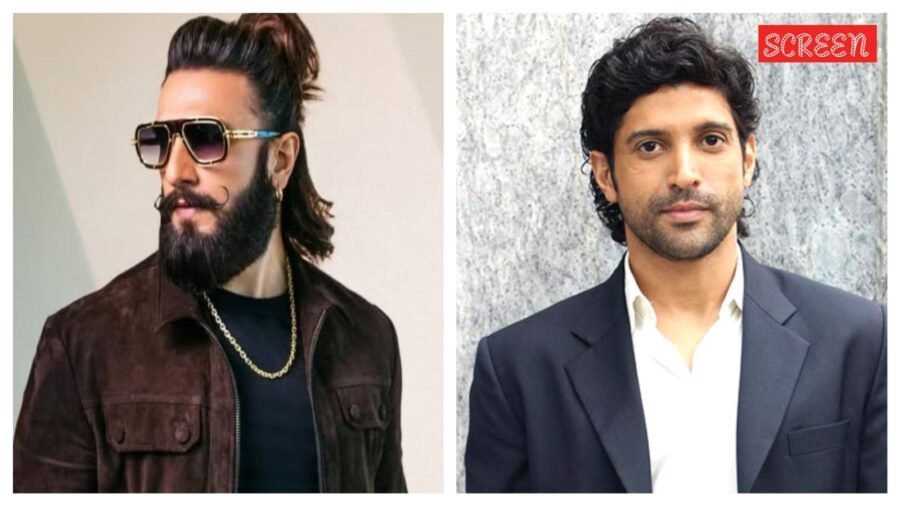
The row between Ranveer Singh and Farhan Akhtar over the former’s alleged sudden, unceremonious exit from Don 3, the latter’s highly anticipated directorial, has taken a new turn. After turning to the Film Western India Cine Employees (FWICE) a few months ago didn’t bear any fruit for Farhan and his producing partner Ritesh Sidhwani’s Excel Entertainment, they recently resorted to another film body.
Ranveer Singh’s response to IMPPA
After hearing their side of the story, the Indian Motion Pictures Producers Association (IMPPA) invited Ranveer to present his side of the story. While Ranveer’s father Jagjit Singh Bhavnani agreed to meet them, the actor’s team sent the film body their response, urging IMPPA to stay out of the row, and even threatening legal action in case they don’t.
A Mid-Day report claims that Ranveer threatened to sue IMPPA if they take any recourse, given they don’t enjoy any jurisdiction over the said matter. Ranveer took the same stand against the FWICE a couple of months ago, a week after the film body issued a non-cooperative directive against the actor. So, the fact that IMPPA may face similar consequences would not be surprising.
Story continues below this ad
Is an MoU legally binding?
The more interesting part of Ranveer’s response is his claim that there exists no “formal agreement” between him and Excel Entertainment for Don 3, but only a “Memorandum of Understanding (MoU)”. That’s why he’s insisting all film bodies to not interfere in the matter, and let Excel Entertainment go to court if they want a recourse.
So, is an MoU not legally binding? Does it not hold any enforcement powers at all? SCREEN spoke to Sanjay Vasudevan, a media and entertainment lawyer at Bay Counsel LLP, for a more informed perspective. “Without reviewing the actual MoU, together with any related correspondence and subsequent conduct of the parties, it would not be possible to make a final determination as to whether the MoU between Ranveer Singh and Excel Entertainment was legally binding. The absence of a separate long-form agreement is relevant, but it does not, by itself, mean that no enforceable contract existed,” he says.
“A court would likely examine the language of the MoU, including whether it uses mandatory terms such as ‘shall’ or ‘undertakes’, whether it contains a ‘subject to contract’ qualification, and whether it specifies matters such as the actor’s role, remuneration, dates, exclusivity, promotional obligations, termination rights, and consequences of withdrawal,” argues Vasudevan.
“The parties’ subsequent conduct would also be relevant, including whether an advance was paid, dates were blocked, pre-production commenced, public announcements were made, or the parties continued negotiating material commercial or creative terms,” he adds. As is known, both Excel Entertainment and Ranveer had jointly unveiled the promo of Don 3 three years ago, which even featured the actor taking on the titular role. The production house has also furnished details of the impending outdoor shoot, pre-production expenses incurred, and Farhan’s periodical communication with Ranveer before his exit, along with the relevant supporting documents.
Story continues below this ad
“The practical distinction is that a binding agreement may give rise to contractual remedies, including damages for proven and foreseeable losses, subject to principles of causation, remoteness, and mitigation. Depending on the terms, a party may also seek injunctive relief or other equitable remedies. However, compelling an actor to provide personal artistic services through specific performance would generally raise significant legal and practical difficulties,” points out Vasudevan.
“In the film industry, it is common for an initial term sheet or MoU to be followed by a more detailed talent or artist agreement dealing with remuneration, schedules, creative approvals, publicity, credits, intellectual property, termination and liability. Whether the later agreement was merely intended to document an already concluded bargain, or was instead a precondition to any binding commitment, would depend on the wording of the MoU and the surrounding facts,” he adds.
In conclusion, Ranveer’s position that only an MoU existed may be “legally significant”, most crucially “if the document expressly contemplated a future definitive agreement and left material terms unresolved”. However, that doesn’t prevent Excel Entertainment to contend that the MoU itself recorded a “concluded commitment” and the subsequent agreement was intended only to “capture operational details”. However, exact terms of the MoU would be studied in order to decide the merits of either case.

Shark Tank India judge richer than Shah Rukh, Amitabh Bachchan, Salman, Hrithik combined
By Sohail Khan · 25 Sep