Question mark on Rahman visit as Delhi, Dhaka push to dial down chill
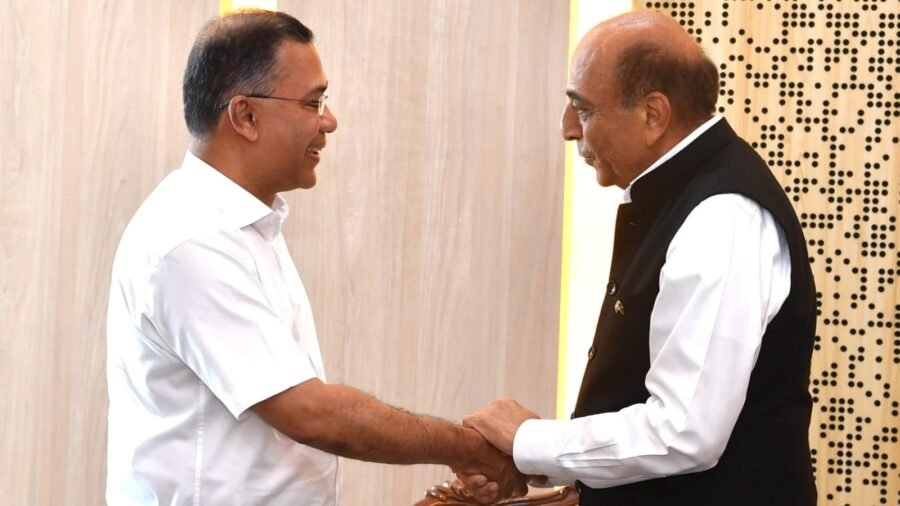
Intense negotiations are on between Delhi and Dhaka over ousted Bangladesh Prime Minister Sheikh Hasina’s continued presence in India, her recent statements and their potential to adversely affect bilateral ties including a visit by Bangladesh Prime Minister Tarique Rahman, has learnt.
Rahman’s visit was scheduled for August 21 and is now an issue on the diplomatic table. Indian and Bangladeshi diplomats and security officials are working towards navigating the turbulence in the relationship, which has re-emerged six months into Rahman’s prime ministership.
While trouble has been brewing for some time now, the latest provocation was Hasina’s statement on August 5, marking two years of the collapse of her government in the face of violent protests that forced her to flee and take refuge in India. In her first press conference since then, conducted online where she joined on audio mode from an undisclosed location in India, she announced her plans to return to Bangladesh, possibly in December, and said she may be killed on her return. She faces death sentence in Bangladesh courts.
Earlier, following India’s gesture of sending External Affairs Minister S Jaishankar to attend the funeral of his mother and former Prime Minister Khaleda Zia last December, Rahman is learnt to have told Bangladesh Nationalist Party (BNP) leaders to refrain from targeting India during the election campaign. He, too, maintained calm in his rhetoric, and never targeted India during his poll speeches.
After Rahman emerged as the winner of the Bangladesh elections in February, Prime Minister Narendra Modi was among the first to call and congratulate him, setting the tone for a positive bilateral relationship.
However, in the run-up to the West Bengal Assembly elections in April, the rhetoric on the Indian side regarding illegal immigrants from Bangladesh was not subtle. And after the BJP’s win, the detention and pushback of immigrants into Bangladesh’s territory did not go down well, according to sources.
In fact, Delhi and Dhaka were discussing a possible visit by Rahman in early June, but the reports of illegal Bangladeshi immigrants being detained and pushed back soured the atmosphere. Rahman went to China for his first bilateral visit, which was seen as a signal to Delhi.
Story continues below this ad
In July, the two sides again tried to pick up the threads and dates for a bilateral visit between August 1 and August 10 were being explored. But that didn’t materialise, with the Monsoon Session of Parliament being cited as one of the reasons.
Parallelly, the Indian side also invited Rahman to attend the BRICS leaders’ summit in September, as a guest and chair of the BIMSTEC grouping.
Then, the Indian side proposed August 21 as a possible date for Rahman’s visit.
However, soon after the date was proposed, Dhaka came to know that Hasina would address a press conference at the Foreign Correspondents’ Club of South Asia in New Delhi. While her recorded message was played at a press conference by Awami League leaders in exile in January, this was the first time that she was answering questions live, along with her son Sajeeb Wazed Joy, since fleeing Bangladesh.
Story continues below this ad
Dhaka then put the discussions of Rahman’s visit to Delhi on hold, and raised this issue with the Indian government.
Bangladesh Foreign Minister Khalilur Rahman, who was earlier the National Security Advisor, called up NSA Ajit Doval and lodged a protest. Doval is learnt to have conveyed that the interaction was only for foreign media based in Delhi.
Bangladesh PM’s foreign affairs advisor Humayun Kabir also met Indian High Commissioner Dinesh Trivedi and raised the issue.
However, the interaction on August 5 was attended by foreign and Indian journalists, prompting a sharp reaction from Dhaka. Delhi maintained that it had “no role” in organising the interaction and it “did not endorse” Hasina’s statements. But the damage was done.
Story continues below this ad
The fact that Hasina was given a platform on August 5 — the day which saw a memorial being opened in Dhaka for the students and protesters killed during the July-August 2024 protests — did not go down well with Bangladesh.
Later, at their first face-to-face meeting, Rahman conveyed to Trivedi that Hasina’s extradition was a core issue for his government. Dhaka is learnt to have made clear that unless Delhi gives cogent response on the next steps to be taken for her extradition, it would be difficult for Rahman to visit India.
“We are working to ascertain the intent of the Indian government on the Hasina issue,” said a Bangladeshi official. “Is India open to seeing her return to Dhaka and face due process?”
Almost simultaneously, in a carefully choreographed move, India’s Research and Analysis Wing (R&AW) chief Parag Jain visited Bangladesh and met the top intelligence and security officials there, who are learnt to have underlined that Delhi needs to be sensitive about Dhaka’s concerns over Hasina.
Story continues below this ad
Earlier this week, Trivedi met Modi in Delhi and briefed him on the situation.
According to sources, though not linking the two issues directly, Indian officials were told that if they want Bangladesh to not allow anti-India activities and statements from Bangladeshi soil, they should reciprocate as well.
Delhi’s view is that Hasina is a political fugitive and a political asylum seeker, and this cannot be conflated with extremists in Bangladesh who may be a security threat to India’s interests. “If she goes back on her own accord,” said an official, “then there is little we can do except appeal for due process and justice.”
While the view among Bangladesh officials is that Delhi “underestimated” Dhaka’s reaction to Hasina’s statements, that too on the second anniversary of the collapse of her government when the wounds are still raw, Indian officials feel that Bangladesh “overreacted” to a press conference.
Story continues below this ad
But both Delhi and Dhaka need each other for the stability and prosperity of their countries. Rahman is battling an economic challenge due to the energy crisis accentuated by an acute diesel shortage and rising prices within the first month of assuming office, as the war between US-Israel and Iran began in February-end. So, he needs India’s support for energy supply.
And, Delhi needs the support of the Rahman government for keeping the borders safe and secure from anti-India elements. Delhi also needs Dhaka’s support in accessing its North-east
In the short-to-medium term, the two sides have a series of unresolved issues — the renewal of the Ganga river water sharing treaty this year, and the signing of the Teesta river water sharing treaty which has been pending for a decade-and-a-half.
So, both sides are trying to work out a diplomatic solution. Rahman’s August 21 visit is still on the table, but the current time frame appears too short to reach an actionable solution.
Story continues below this ad
Delhi has to navigate how it can protect its long-time ally and friend, Hasina, without jeopardising its bilateral relationship with Rahman’s government, sources said. After all, Delhi took a conscious decision to grant her asylum when all doors, including that of the UK, were closed in August 2024. “But that can’t risk our bilateral ties with the government of the day in Dhaka. There needs to be a cautious balance, and we are optimistic of a resolution,” said a top source.
‘Great sorrow’: What’s the project that made Jyotiraditya Scindia lose his cool
By Sohail Khan · 1 Oct
‘Gravely injured’ but safe: Captain Smit Machchhar being treated in Saudi Arabia
By Sohail Khan · 1 Oct