Pool therapy: How India can swim in the fast lane
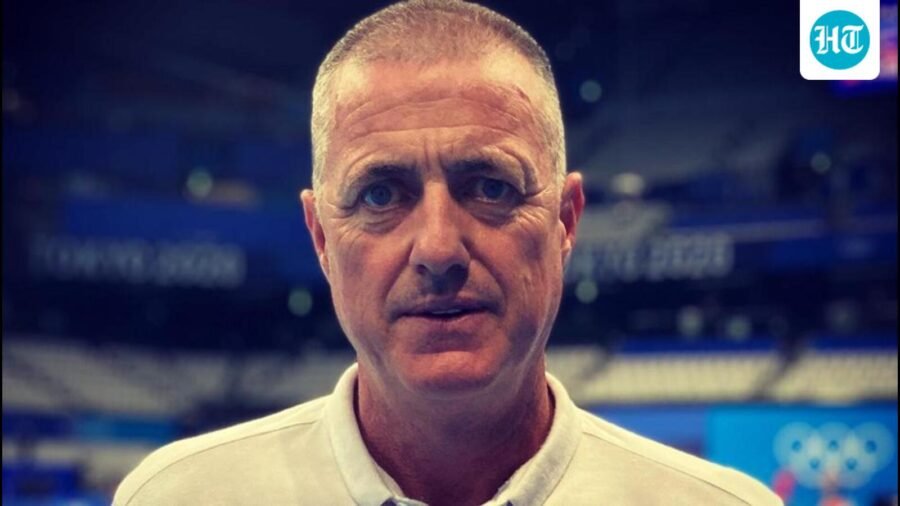
Sean Kelly returns to India for a coaching camp, advocating for a national performance center to enhance swimming standards ahead of the 2030 CWG.
Updated on: Aug 31, 2026, 19:46:34 IST
Prefer HTon Google
Share via
Copy link
Mumbai: After starting his coaching journey in Australia, Sean Kelly moved to a swimming club in Manchester. The Stockport Metro club had one 50m pool with a boom. It was shallow at one end and deep at the other, and had four lanes for training in the morning and eight short course lanes in the evening.
“Four Olympic medals came out of that pool,” Kelly said.
Many swimmers from that club also returned as medallists from the 2010 Commonwealth Games (CWG) in New Delhi, where Kelly was part of England’s elite swim coaches.
The multiple Olympic medal-winning coach, who after a 26-year stint at the club worked as Spanish swimming’s technical director, is back in India. This time in Ahmedabad, for a 45-day coaching camp with India’s top swimmers ahead of the Asian Games.
Far from that modest setup at Stockport, the newly-revamped Veer Savarkar Sports Complex pool offers a more modern starting point.
“It’s as good as any pool I’ve worked in anywhere in the world,” Kelly told .
Now for that global standard infrastructure to be put to use to improve Indian swimming’s standard. Which, at the moment, isn’t all that high at the Asian or Commonwealth level, let alone the world.
“Rome wasn’t built in a day,” said Kelly.
Work has to start today, however, if India are to build towards being competitive in the pool at the home 2030 Ahmedabad CWG.
“Plans are in place, but they need to push the green light sooner rather than later,” said Kelly. “Because if you wait another year, there’s going to be a problem.”
A big part of those plans, and according to Kelly the major missing piece in India’s swimming plateau puzzle, is developing a national performance centre.
“I can’t think of a country that’s in the top 20 in the world that doesn’t operate performance centres,” said Kelly. “It’s more of a club culture here, which is good. But there needs to be a couple of layers on top of that, where maybe you have regional centres, from where they can work on pushing kids into a national centre, or perhaps two or three across regions.”
When Kelly moved to Spain, they had one high performance centre in Barcelona. They then created three, he said, region-wise. Quickly, the number of swimmers coming into it grew. Australia’s swimming ecosystem comprises eight high performance centres across states.
“I mean, it’s not a new idea,” Kelly chuckled. “But it’s the one thing that stands out as being different in India.”
Most of India’s top swimmers train in their own clubs or setups. That, Kelly felt, rarely works. “Because you’ve got nobody to challenge you in training. Because if you’re the top dog in the club, you don’t get threatened.”
Some Indian swimmers head abroad to train, citing lack of a quality group in the country to push them. Young hopes Aryan Nehra (France) and Rishabh Das (Australia) are current examples.
A high performance centre, with top level coaches “who have been there and done that”, may keep them home. The centre can also become “an education hub for the best young coaches in the country”, said Kelly, who has also worked as a coach educator in the UK. That in turn can help develop domestic coaches for the future.
Infrastructure and modern technological tools aren’t a problem in India, he felt.
“You’ve got some of the best analysts and data people in the world in Bengaluru. You’ve got one of the best pools in the world in Ahmedabad. What more do you need?” he said.
Perhaps a higher volume of swimmers at the top level, across events and strokes.
“If there’s two senior boys and two senior girls, it’s not enough,” said Kelly. “You need numbers to create that competitive environment. Not too many. Between 8 and 12 is probably the sweet spot, where people are going to rock up every day, work hard and try to beat the guy next to them.”
Kelly has been working with nine boys over the last month in Ahmedabad, telling them “some things they didn’t know” and training them with a “little higher intensity”. “They’re high-fiving each other after sessions. There’s a good team spirit going,” said the experienced coach.
Kelly believes Indian swimmers who may fight for medals at the 2030 CWG, or beyond, may not even be in the system’s radar at the moment.
Spotting and scouting young talent nationally is a “massive job”. Coaches have to look for specific things, said Kelly, including whether the kid is turning up wide-eyed, how many strokes he/she takes to swim the 25m, and how quickly he/she can pick up skills and adapt.
“Technical skills, like how to dive, turn correctly, and swim with the correct stroke,” said Kelly.
“If they’re fast, they’ll swim fast anyway, so you’ll be able to see that from their times. Kids that can get from one wall to the next by swimming terribly but fairly quick, they probably won’t last in the sport. But the ones for which it looks effortless, and take a few strokes less, they are the ones you’ve got to pick out.”
For Kelly, talent isn’t the issue in Indian swimming.
“I mean, there are not a great number of talented swimmers, but there’s definitely some very good swimmers here,” he said. “There just needs to be more of them. And they need to train together.”
It all comes down to that. The Swimming Federation of India (SFI) has had conversations, as general secretary Monal Chokshi told earlier, with the sports ministry and Sports Authority of India about creating a proper training centre in India. Kelly and SFI have had discussions for a long-term role, which the Manchester-born coach is open to, if the discussed plans are set in motion. And soon. “Because the CWG is around the corner,” he said.
That CWG, in 2030, should be India’s first aim, for now.
“Indian swimmers have never worn a CWG medal. That would be like winning an Olympic gold, to start with,” said Kelly. “It would create an enormous amount of momentum, because millions of kids will see that. It will inspire them, and they will have an idol.”
See Less

India suffer double fencing setback, men’s foil and women’s epee teams exit in round of 16
By Sohail Khan · 25 Sep
Asian Games 2026: India pass Japan test with flying colours
By Sohail Khan · 25 Sep
Manush-Diya: From a chance pair to Asian Games medallists
By Sohail Khan · 25 Sep