Police used excessive force during Delhi protests: Amnesty
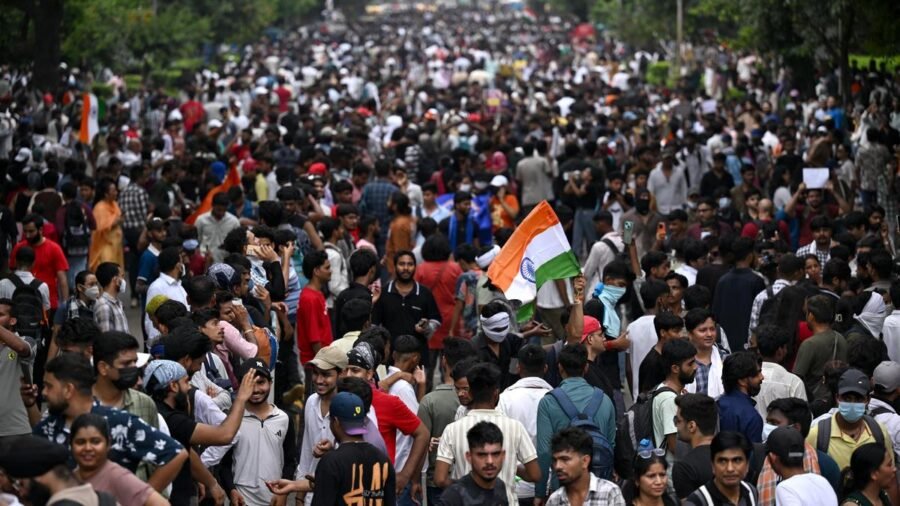
Police used excessive force, including electric shock devices and pellet guns, against youth-led protests that forced Union Education Minister Dharmendra Pradhan to resign last month, Amnesty International said Monday (August 24, 2026).
A report from the rights' group clashes with the police account that force was used only after protesters turned violent, and comes after the Supreme Court set up a panel on Thursday (August 20, 2026) to investigate violence by both police and demonstrators.
Demonstrations in New Delhi, triggered by the leak of NET-UG paper, turned violent on July 20 when thousands of protesters attempted to march towards Parliament.
Amnesty said witness testimony and visual evidence it had verified confirmed the use of "pellet-firing shotguns, tear gas launchers, grenades, batons and electric shock devices against protesters" in Delhi and Bihar.
Amnesty said it had also verified two instances of a police officer "unlawfully using lethal force against a crowd" in Bihar's Siwan district. No one was killed. "The weapons were deployed in a manner that breached international law and standards and domestic policing guidelines," it added.
Amnesty said that there were "isolated incidents of protesters throwing stones", but that the "heavy-handed response was state-sanctioned violence masked as crowd control."
Delhi Police said in a Supreme Court hearing last week they had used force only after protesters "resorted to violence". They said anti-social elements "masquerading as aggrieved students" caused "grievous injuries" to security forces.
On Friday (August 21, 2026), Congress leader Rahul Gandhi staged a sit-in outside a Delhi police station with a 19-year-old protester who said he was injured by pellets during the demonstration.
Mr. Gandhi demanded a police investigation into the shooting, and officers later registered a case over the complaint.

Hyderabad Metro, SCR’s MMTS to run special services on September 25 night
By Sohail Khan · 25 Sep
‘Gem Granites’ Veeramani POCSO Act case: All-woman SIT to take over probe
By Sohail Khan · 25 Sep