Pakistan’s new recruits don’t cross the border. They’re Indian teens
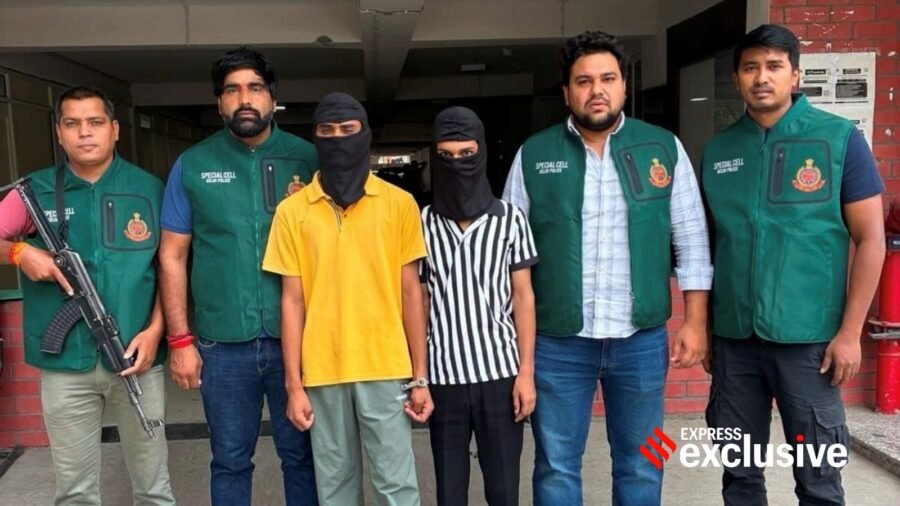
Ashraf Daniyal, 23, a handloom worker from Barabanki in Uttar Pradesh, living in Bhiwandi, Maharashtra; Sajid Mehboob Shaikh, 21, a garbage collector from Kurla, Mumbai; Krishna Mishra, 20, of Gorakhpur, UP, forced to take up work as a child due to poverty; Amarjit Singh and Karanjit Singh (both 19) and Satnam Singh, 22, friends from Gurdaspur, Punjab — these are a few of the many youngsters identified in the past two years by law enforcement agencies across the country as having been lured via social media by Pakistan’s Inter-Services Intelligence (ISI), and nurtured as sleeper cells to carry out activities at its behest.
At the heart of the alleged operations, as per officials, is Pakistani gangster Shehzad Bhatti and his associates. Daniyal was allegedly befriended in January this year on Instagram by Hamad Memon, an aide of Bhatti. After he had been suitably impressed by Memon, Daniyal was reportedly invited to another messaging group where one of the main topics of discussion was the state of the minorities in India and how to change it.
Advertisement
Soon, Daniyal was allotted a seemingly harmless “task”, in exchange for money: he was to take a video of the local Narpoli police station in Bhiwandi and send it to Memon.
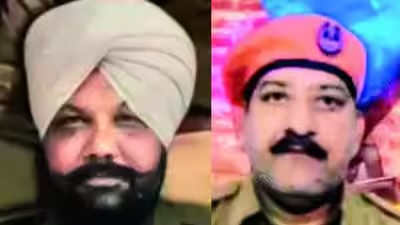 Two of the three cops killed earlier this year in Punjab
After Daniyal sent a 17-second video, as per officials, he was assigned another “task”, along with a photo of Pakistani gangster Abid Jatt. Daniyal was allegedly told to take 50 printouts of the same and put it up in his locality, sending a video of the same back as proof.
In the first week of May, the UP Anti-Terrorism Squad (ATS) zeroed in on Daniyal and picked him up from Gorakhpur. They claimed to have recovered a firearm from his residence, and alleged he had been roped in to target key institutions, police stations, and outposts in UP and other cities.
Advertisement
Unlike the above plot that was foiled on time, the grenade attack at the Gurdaspur police station on November 25, 2025 — for which Amarjit Singh and Karanjit Singh (both 19) and Satnam Singh (22) were held — was one example of a successful hit orchestrated by Pakistan-based gangsters, say officials.
They also see a similar plot in the mysterious killing of three policemen along the India-Pakistan border in Gurdaspur and Amritsar in Punjab earlier this year.
In July this year, ATS teams conducted raids in more than 20 cities of Rajasthan and 28 youngsters “linked to Bhatti” were detained, for allegedly planning activities that would have disturbed the law and order situation.
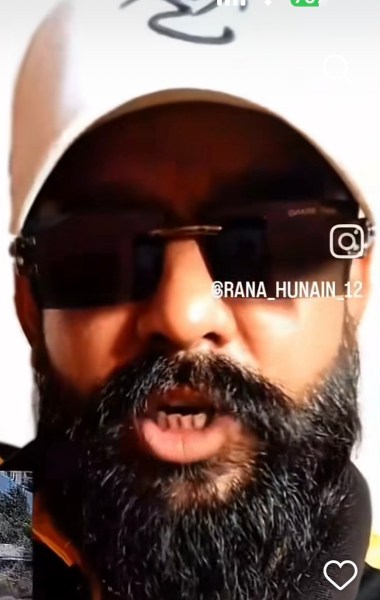 Rana Hunnain, accused of recruiting Indian youngsters online.
As per ATS officials in UP and Maharashtra, in several cases, firearms were dropped across the border using drones, and youngsters from border areas like Punjab and Rajasthan were lured to move these.
Bhatti has denied the allegations, posting on Instagram that he had nothing to do with the youngsters, and threatening police officials who blame him.
Incidentally, Indian gangster Lawrence Bishnoi, who has been imprisoned in Sabarmati Jail in Ahmedabad since August 2023 and was recently charged by US authorities with the killing of Sikh separatist leader Hardeep Singh Nijjar, is believed to use similar social media modus operandi to recruit for his gang. Lately positioning himself as a rival of Bhatti, Bishnoi has started using patriotism and religion as his USP.
Bishnoi and Bhatti have claimed they were friends in the past, who fell out over deteriorating relations between India and Pakistan.
Unlike Bhatti though, Bishnoi recruits largely on this side of the border than abroad, and uses youngsters for carrying out extortion.
Officials who have profiled the youngsters say a majority have not finished schooling, are from troubled families, face drug or alcohol addiction, and are working in low-paying odd jobs, as delivery boys, shop employees or as workers at stores and factories.
If, like Daniyal, some are lured by talk of attacks on minorities, those like Mishra are unhappy with the “system”. As per officials, the biggest incentive, however, is money, paid up front.
In the most recent arrests, a Delhi Police Special Cell in coordination with the Maharashtra ATS, held eight youngsters from across the country, including Sajid Mehboob from Kurla on May 28. Sajid, who lives in a rented tenement along a railway track in Kurla (East), lost his father at a young age and mother when he was 15, and collects garbage for a living.
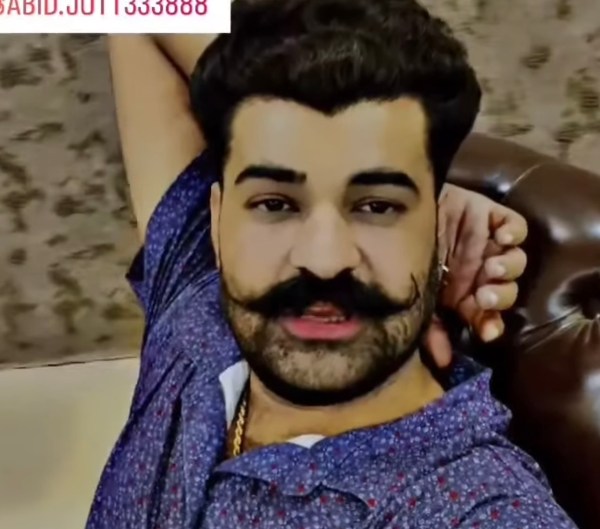 Abid Jatt
As per agencies, Sajid responded to a reel posted by two aides of Bhatti, Runa Hunain and Yawar Khan, on Instagram, following which the latter got in touch with him. After long discussions on the condition of minorities in India, Sajid was given Rs 25,000 and told his “task” was to attack security personnel and government buildings in Delhi, officials say.
Sajid’s maternal uncle Iqbal Shaikh says his nephew struggled with substance abuse, due to which he was thrown out of the house.
Tauqeer Shaikh (26), who was arrested along with Sajid, told the authorities that he received Rs 21,000 from the same source. A crane operator, Tauqeer lives with his parents in Mumbra.
Sher Bano, Tauqeer’s paternal aunt, says he was addicted to intoxicants. “He told me he had got Rs 21,000 in his bank account after he was introduced to an online contact through another youngster.”
“In the UP ATS case in which 17 persons (including Mishra) were arrested, Mohammad Umar and Faizan were instructed to paste posters carrying photographs and messages glorifying Abid Jatt at public places. Umar and Faizan, who have only studied till Class 5, were promised Rs 12,000 each,” an officer says.
Anil Shukla, Special Commissioner, Delhi Police Special Cell, who has been part of a crackdown on Bhatti, says: “Usually, youngsters who are from low-income groups and addicted to drugs, and in that sense desperate for money and purpose, are the kind of people who fall prey to these traps… They are promised they will be relocated to Dubai or other countries, and told they would be heroes for the community.”
As per Shukla, that is the biggest pull — the promise to be made heroes.
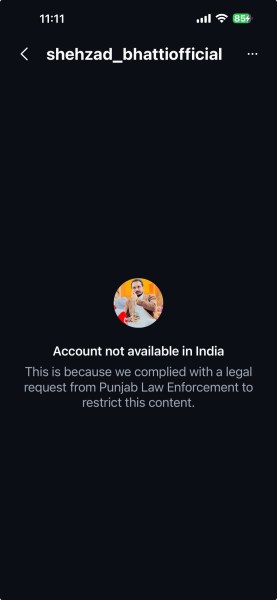 Shahzad Bhatti’s Instagram account blocked in India
Amitabh Yash, Uttar Pradesh ADG (Law & Order), says the tender age of those targeted is a factor and that, “there is a reference-based system at play where, once a youngster is lured through social media, they will ask for references of other youngsters in their circle”.
A Maharashtra ATS officer says: “Most of the youngsters targeted are vulnerable, and look up to Bhatti and others as someone who can help them. They may have simply commented on Instagram posts, after which Bhatti and company reach out to them.”
A UP ATS officer gives the example of Gorakhpur’s Mishra. The officer says Mishra was angry about police not helping him against a relative, who had reportedly denied his family a share of the land, after his father passed away. He was allegedly lured by Bhatti’s gang with the promise of “avenging the injustice”, and was told that in exchange, he would be given firearms to attack an officer of the local police station. Mishra was to make a video of the attack and send it to them.
The ATS claims to have recovered a country-made 9mm pistol and cartridges from Mishra’s alleged associate Ashraf, and a .315 bore country-made pistol with cartridges from him.
Agencies have found no instances of women being lured by these social media accounts so far.
The comments section
It is the comments section of social media platforms like Instagram that has become a hunting ground, officers say, with Bhatti and others putting up flashy social media posts and reels positioning themselves as saviours of the disgruntled.
As they receive comments for these posts, Bhatti’s gang starts going through them to identify the vulnerable targets based in India. “After a basic scan of the account, the gangsters reach out to these youngsters through direct messaging. Since these youngsters are in awe of the person, they are overjoyed. And if they pass the first test, other accounts are shared and, ultimately, small tasks handed out.”
Another officer says: “Once the person has successfully completed the small tasks, they are used for bigger ones. In some cases, they are also asked to travel to Delhi or other places to receive arms and ammunition.”
UP ADG Yash says: “It is graded work, where one task leads to another. Like, first they will be told to put up posters, then to set things on fire, and so on and so forth.”
A Maharashtra ATS officer says some of the targets are youngsters who evidently belong to the minority community as they post reels from Muslim localities.
Officials say that in most cases, they counsel the youngsters concerned and, if they are not involved in any incident leading to harm, an FIR is registered and they are let off after counselling.
Agencies have also started proactively following some of the suspect overseas names on social media to keep a watch on their activities. In many cases, they themselves approach youngsters who appear to have been identified as targets and warn them, an officer says. In a lot of cases, social media platforms are approached to get accounts blocked in India.
However, the official underlines the difficult battle: “The accused keep creating new accounts from which they post reels, usually with figures 333, 666 or 999 in their handles.”
An officer underlines the attraction of this strategy. “Earlier terror networks would either send their own people or arrange for people from India to get training and then send them back. There is a lot that could go wrong in this. Using ill-guided, vulnerable youngsters of the same country proves much more effective and easier. Even if they fail, there is nothing to lose.”
Bhatti, who is believed to shuttle between Dubai and Pakistan, faces charges of bomb-making and the supply of illegal arms and ammunition to India, Dubai, the US, and Canada. He is known to be close to Balochistan-based gangster Farooq Khokhar.
Apart from allegations of luring youngsters on social media, Bhatti is accused of being involved in the March 2024 grenade attack at the residence of YouTuber Rozer Sandhu in Jalandhar, Punjab, and the threat to actor Mithun Chakraborty in November 2024 over his purported remarks against Muslims.
Officials say Jatt alias Abid Chhal likes to portray himself as a “Pakistani don” and is very active on social media portals like Instagram and Snapchat.
There is also Rana Hunnain a.k.a Rana Bhai, who has FIRs against him in at least five states in India, for allegedly trying to lure youngsters with promises of money, firearms and better social media reach.
The other Pakistani-based gangsters accused of similar operations are Ajmal Gujar, Hammad Memon, Ashraf Bashir Alam, Uzair and Yawar Khan.
Officers say this trend has also been observed globally over the past few years, as low-level wars rage between countries, be it Ukraine-Russia or now Iran vs the US and Israel, with agencies recruiting youngsters of “enemy nations” for small acts of sabotage, using social media. “They just have to look for disgruntled youngsters and rake up an emotional issue to influence them,” the officer says.

Put up in resorts, Congress’s Jaipur candidates leave for home over ‘lack of rooms, food’
By Sohail Khan · 14 Sep
Former Chhattisgarh chief minister Baghel’s OSD held in exam irregularities case
By Sohail Khan · 14 Sep
Assam railway network now 100% electrified: What it means for train passengers
By Sohail Khan · 14 Sep