Operation Safed Sagar finds restraint in war; Vijeta reckons with its human cost
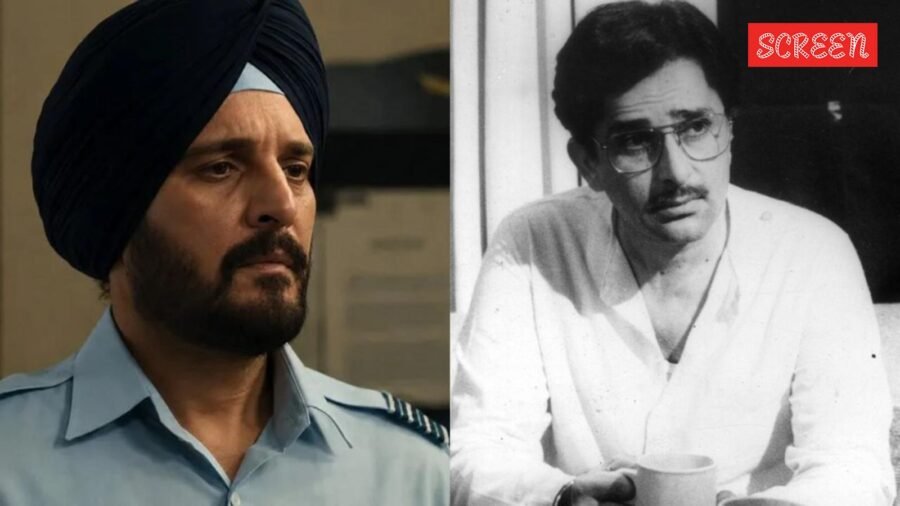
The bar for patriotic filmmaking has fallen so low that restraint now passes for radicalism. Anything that isn’t jingoistic feels like a reprieve. Anything that doesn’t require the enemy to be endlessly vilified feels almost subversive. In such a landscape, Operation Safed Sagar is a similar silver lining, not because it reinvents the grammar of the genre, but because it remembers what that grammar was always meant to be. Its genius lies not simply in what it gets right, but in what it refuses to get wrong. It possesses a moral clarity without moral grandstanding. That’s why its patriotism is neither declamatory nor insecure; it does not need to manufacture hatred to make courage feel heroic.
Created by Abhijeet Singh Parmar and Kushal Srivastava, the six-episode series chronicles the Indian Air Force’s ‘Golden Arrows’ squadron during the 1999 Kargil conflict, while balancing two distinct tonal registers. The first is familiar, fairly conventional: a base camp populated by young, zealous cadets and their mentors, Squadron Leader Ajay Ahuja (Siddharth) and Wing Commander Tony (Jimmy Shergill). There are botched missions, budding friendships and mentors imparting hard-earned wisdom in the language of experience. But the show finds its most affecting register, however, in something as mundane as ‘bouncing’, when cadets turn up uninvited at a mentor’s home for dinner, only to be put to work chopping vegetables.
It is in these small rituals that these soldiers become people. Each carries a private history, a life beyond the uniform, ambitions and anxieties that Hindi cinema’s often flatten into the broadest silhouette of the patriotic hero: brave, unquestioning, and eager to kill. Operation Safed Sagar lets them remain human before it asks them to become heroic. But the show’s most entertaining passages emerge from its second tonal register: the Pakistan side of the conflict. Here, General Pervez Musharraf (a terrific Manu Rishi Chadha) is portrayed as a man intent on manufacturing a war, as he attempts to outmanoeuvre his own Prime Minister, Nawaz Sharif (Vinay Pathak). It is an intriguing structural choice to position the series between a military drama on one end and a political thriller on the other.
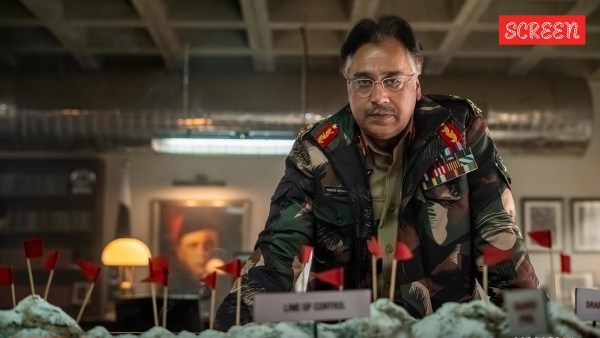 Manu Rishi Chadha plays Pervez Musharraf in Operation Safed Sagar.
Its sharpest pleasures lie here because, unlike so many war narratives that render Pakistanis through a jaundiced lens, as villains born with hatred and sustained by vengeance, the series finds greater dramatic intrigue in their internal political contest. Their struggle is almost Shakespearean. In that friction, the show allows them to become human, ambitious yet fallible, hungry for victory yet equally consumed by the fear that someone else might claim it. These portions are also perhaps the most compelling precisely because the creators are liberated from the burden of fidelity. Since the series is entering the realm of Pakistan, you can feel them flexing their dramatic muscles.
On the Indian side, however, the series remains more measured than melodramatic. In that sense, this approach is neatly encapsulated by what Tony tells his young cadets in the first episode: politics is not our concern; when we are called upon, we must be “razor blades”, strike, and do the damage. But the writing gradually complicates this credo, as the irony lies in watching Tony himself drift beyond the discipline he preaches, becoming emotional and, at times, acting on impulse. Towards the end, an exchange between him and his young officer Dhali (Abhay Verma), is rather touching, as they confront their respective guilt. In a narrative that largely insists on keeping war at arm’s length, such an admission of guilt briefly punctures that armour.
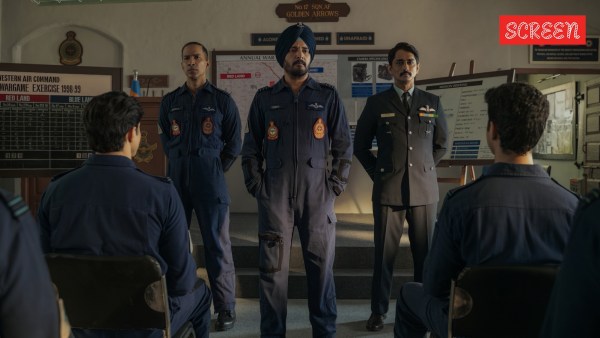 Tony tells his young cadets to be razor-blades.
However, the true test of any great war narrative lies in its anti-war impulse, and this is where Operation Safed Sagar eventually falls short. The same detachment that gives the series its discipline also becomes its limitation. It observes the machinery of war without fully confronting what that machinery does to the human beings caught inside it. Surely, there is courage here, but not the emotional spine to reckon with its cost. Surely, there is a track about a wife left alone after her husband dies in combat, but it immediately brought to mind a far more arresting anti-war narrative, Govind Nihalani’s Vijeta (1982), arguably the first Hindi film to seriously engage with the Indian Air Force.
Story continues below this ad
Look at this scene from the film. Angad Singh (Kunal Kapoor), a newly trained Air Force pilot, speaks to his colleague about a war that is about to begin. He excitedly talks about the destruction his plane will cause. But immediately, another thought begins to haunt him: what if the bomb falls on those who have nothing to do with the war? His patriotism, suddenly, is shadowed by doubt. His courage does not absolve him of that fear. His heroism has barely begun, and already he is questioning what it means to be a hero. If Nihalani lays bare the larger cost of war on one hand, he is equally attentive to its intimate cost: the lives it unsettles long after the soldier has left for the battlefield.
Vijeta, essentially a father-son narrative, begins with Nihal Singh (Shashi Kapoor, as assured as ever) caught in a dystopian dream. He is alone in a desert, digging through the sand as though searching for something buried beneath it. He eventually uncovers the face of his son, half-submerged in the earth, while the roar of fighter planes fills the sky above him. What begins as a nightmare gradually acquires the weight of prophecy. By the film’s end, when Nihal prays for his son after he goes missing in the war, that buried face from the dream returns with devastating force.
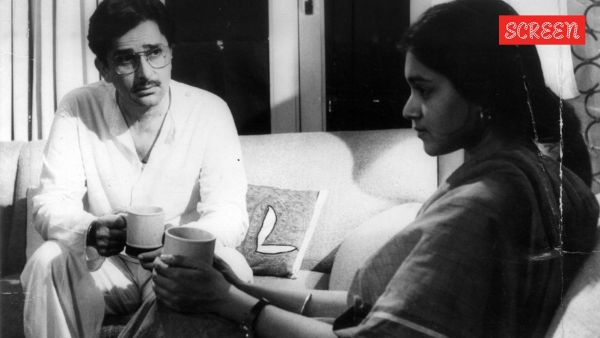 The war may be fought in the skies, but its deepest wounds are inflicted on those waiting on the ground.
So, in the latter half of the film, Nihal is almost perpetually tied to the telephone, waiting for it to ring, or listening intently to the war reports on the radio. The conflict remains distant, reduced to voices and static, but its anxiety is written plainly across his face. He does not know where his son is, whether he is safe, or whether the next piece of news will bring relief or loss. The war is happening somewhere beyond his reach, but it has already colonised his home. The war may be fought in the skies, but its deepest wounds are inflicted on those waiting on the ground.
Story continues below this ad
In one of the film’s most haunting scenes, as Nihal waits alongside his son’s partner, Anna Varghese (Supriya Pathak), he asks a deceptively simple question: why is war alone condemned as evil? Riots, he argues, can be worse. In war, you kill people you have never met; in a riot, you can end up killing those you have known all your life, people whose homes you have shared, whose lives have touched yours. These words come from a grief-stricken Nihal, a man who has already seen Partition take his land, his home and an entire world from him. Now, with his son at war, he is forced to contemplate losing yet another part of himself.
It is then difficult not to think of Tony in Operation Safed Sagar and his insistence that his cadets remain “razor blades.” No wonder he eventually struggles against the discipline he preaches. Perhaps, like Nihal, Tony carries the trauma of Partition, the memory of a generation displaced, a land divided, a history written in blood. Someone may call it a war. Someone else, a riot. History will give it a name, a date, a side to belong to. But for those who survive it, violence has no vocabulary.

Bardot auction in Paris fetches nearly one million euros
By Sohail Khan · 22 Sep