Nepal disaster: Four lessons India, China, and Nepal must learn
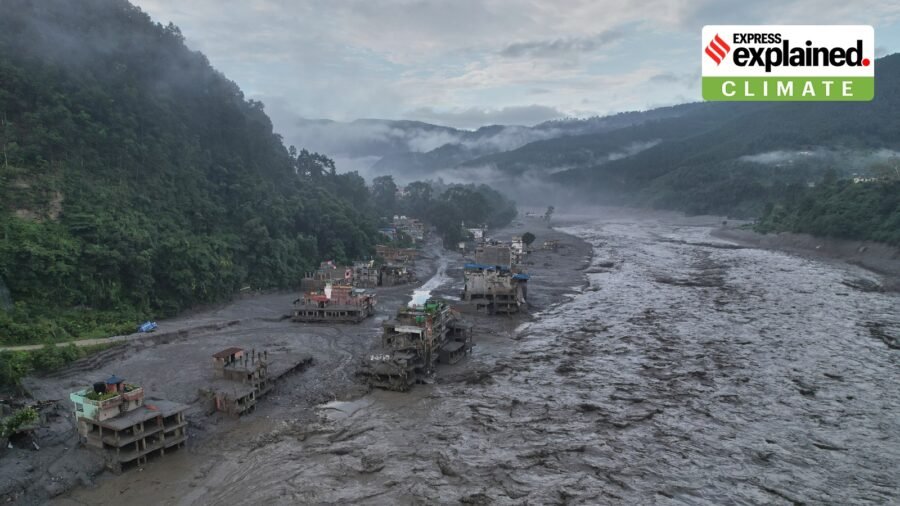
The devastating flood in the Bhotekoshi and Trishuli rivers in Nepal’s thinly populated (48,000) Rasuwa district has killed hundreds and destroyed some of the region’s most beautiful traditional villages, urban settlements, tourist spots, trade routes, social infrastructure, roads, bridges and hydel power projects.
The recent flash flood was an extraordinary, diabolical recurrence of the July 8, 2025 devastation in exactly the same area.This vertical tsunami has triggered four new debates across the fragile Himalayan region.
Borders don’t hold against nature
First, the border as a geometric line — whose breach by another sovereign nation is considered the uppermost national security concern — is clearly not respected by natural disasters. Amid speculation over the Nepal deluge’s origin, scientists and glaciologists have now confirmed that the flood was caused by an avalanche and glacial collapse on the Chinese side of the glaciers near Langtang Lirung.
Story continues below this ad
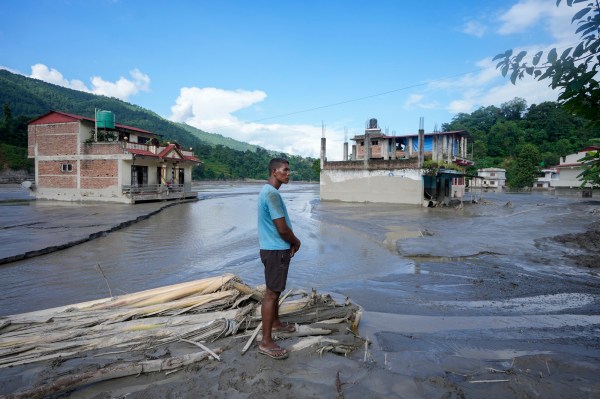 A man stands amid debris after flash floods, at Belkotgadhi in Nuwakot, Nepal, Sunday, Aug. 30.(PTI08_30_2026_000291A)
Thus, the borderland needs to be treated as a distinct, complex space. Nation states can no longer afford dependence-generating diplomacy in terms of sharing information and expertise. Interdependence — in data sharing, joint studies, institutional collaboration, non-sovereignty-centric treatment of climate change impact, and a close inter-governmental early warning framework — has become central.
Translating science into simple public goods for awareness; retraining border defence personnel for changing security threats; ensuring human security in these far-flung terrains; and drawing on traditional knowledge in operations have all acquired new urgency.
The energy stakes are transborder
Second, the flood’s damage to over 15 hydro projects of varying capacities along the Trishuli, and the downstream exposure it triggered, could cause huge national-to-transborder environmental damage. Cascading effects within Nepal, China and India, and further downstream in Bangladesh, have hit the national and public psyche hard, and could disrupt cross-border energy trading and regional power pools, causing acute energy insecurity.
India’s Central Water and Power Commission took the initiative in 1953 to build the first hydel project on the Trishuli. An agreement was signed in 1958, and this 21 MW run-of-the-river project was commissioned in the sleepy mountain village of Tuphe, 6.4 km upstream from Trishuli Bazar, in June 1972 at a cost of Rs 13.55 crore. It long supplied power to Kathmandu. The project now remains largely decimated.
Story continues below this ad
Many China-built highways to Kathmandu run through river belts. The first — a 115-km highway between Kathmandu and Kodari in Tibet, built in 1967 — runs through the Sunkoshi valley, both for strategic reasons and easy access to sand and boulders. Huge settlements have since sprung up as ribbon development along these highways. This flood and others have pushed aid donors for big infra projects to rethink their strategies.
The local-national disconnect in disaster response
Third, the Rasuwagadhi flood surfaced a formidable local-versus-national dynamic. The real impact falls at a very local, remote level, where locals are both first victims and first responders — while the response comes from distant, capital-centric institutions in Kathmandu.
Similar examples exist in India. In October 2023, massive calving from the South Lhonak glacier’s snout triggered a Glacial Lake Outburst Flood (GLOF) in North Sikkim; within hours, the Teesta rose 15-20 metres. The flash flood killed people and animals, and swept away villages, houses, farmland, industrial projects, social infrastructure, tourism and health facilities, defence personnel and ammunition storage, roads, highways, and 33 bridges. The Chungthang dam’s 1,200-MW hydro project was destroyed, and the Teesta was scoured out entirely.
Downstream townships in Sikkim, West Bengal and Bangladesh were buried in slush and debris. Damage was estimated at over Rs 25,000 crore — nearly 60% of Sikkim’s 2022-23 GDP. The loss of 1,800 MW of generation alone cost over Rs 19,000 crore. Though the state’s Chief Minister led the disaster response with National and State Disaster Management teams, the devastation exposed several critical gaps in climate impact management.
Story continues below this ad
The need for interdisciplinary, all-sector understanding of climate change came into sharp focus. Local institutions lacked training, technique and orientation, and their coping mechanisms had little resilience. Municipalities and panchayats stood helpless before the scale of destruction, without training, awareness, preparedness or means to cope. No early warning mechanism existed, and no agency was responsible for one.
This underscored the need to base national institutions and resources at the local level — the real theatre of disaster.
A region without a common climate policy
Fourth, the Himalayan region still lacks a robust, resilient climate policy and institutional framework spanning local, national and regional levels across all sectors. Compartmentalisation persists both within India and across the Hindu Kush Himalayas, and China has its own interpretations and reservations.
ICIMOD, based in Kathmandu, has published evidence-based reports warning of tipping points in the region’s deteriorating glaciology.
India has a National and State Action Plan on Climate Change and eight sectoral missions, including one for the Himalayas. The SAARC Convention on Cooperation on Environment was signed and took effect in 2013.
Story continues below this ad
These scattered approaches must be brought onto a common platform. Who will bell this human-insecurity-centric cat is today’s transborder question.
(Mahendra Lama is an Honorary Senior Adviser at ICIMOD, Kathmandu, and a former Member of the National Security Advisory Board, Government of India)

Heart attacks in fit women in their 30s and 40s: The hidden risk doctors want you to know
By Sohail Khan · 29 Sep
40 years ago September 29, 1986: Violence and arrests in Punjab
By Sohail Khan · 29 Sep