Maharashtra mulls bringing Swiggy, Zomato, Amazon under bike-taxi rules; is this legally feasible?
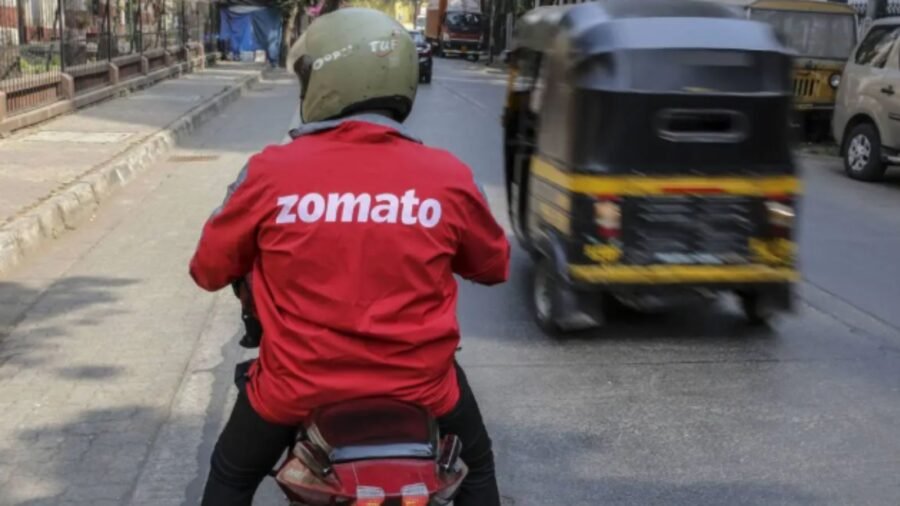
There may be new entrants to the Maharashtra Bike-Taxi Rules, 2025, as the state government is considering extending the regulations to delivery service providers and e-commerce entities such as Swiggy, Zomato, Zepto, Amazon and Flipkart, raising concerns among their delivery partners.
The proposed amendments were mooted after discussions on bike-taxi operations during the monsoon session of the Maharashtra Legislative Assembly, during which Transport Minister Pratap Sarnaik mentioned a 2 percent fare contribution from each ride to a drivers’ welfare fund and a mandatory domicile certificate for all drivers for a bike-taxi permit.
Apart from bringing delivery services under the rules, the proposed amendments prescribe the listing of unique licence identification numbers issued by the concerned state or regional transport authority.
However, a few provisions in the proposal may invite legal scrutiny, .
What do the original rules say?
EV-only: Notified in July 2025, the rules permit only electric two-wheelers – painted yellow and carrying the words “bike taxi” in reflective lettering – to operate as bike taxis. Aggregators are required to operate a minimum fleet of 50 electric bikes registered in Maharashtra.
Fares: For fares, the rules empower local authorities, including Regional Transport Offices, to determine city-specific fares, fleet sizes, routes and live-tracking requirements.
Rules for drivers: The rules also prescribe several driver-specific requirements – valid commercial driving licences, public service vehicle (PSV) badges, police verification, and periodic health and fitness checks.
Story continues below this ad
If e-commerce entities and delivery service providers are brought under the bike-taxi framework, they would be required to comply with provisions such as EV-only fleets, welfare fund contributions, and driver verification requirements.
Are there any challenges?
At present, delivery service platforms are governed by Central laws, including the Consumer Protection Act, 2019, the Consumer Protection (E-Commerce) Rules, 2020, and the Code on Social Security, 2020.
While Maharashtra does not have a separate regulatory framework specifically governing these services, the proposal could still face legal and regulatory hurdles.
“We would ideally like the rules to extend to all delivery service providers because such bikes ply on the roads without adhering to any regulatory norms. However, this change cannot be made unless the Centre changes the legislation for the entire country,” Sarnaik told .
Story continues below this ad
The proposal is currently before the state’s Law and Judiciary department for scrutiny.
Are the additions legally feasible?
The amendments may still face legislative challenges as many low-powered electric two-wheelers, used by the food delivery and quick-commerce riders, may fall outside the definition of a motor vehicle under existing central law.
The rule: Under Section 2(28) of the Motor Vehicles Act, 1988, read with the Central Motor Vehicle Rules, 1989, battery-operated vehicles with power below 250 watts, speeds below 25 kmph and other specified characteristics are exempt from registration and licensing requirements.
Transport officials said many delivery vehicles operate within these capacities.
Story continues below this ad
Legal experts said this could make it difficult for Maharashtra to impose an aggregator-style regulatory framework on such vehicles.
“States can impose general traffic and safety norms under their police powers, but they cannot treat such vehicles as motor vehicles or impose aggregator-style licensing, fare fixation or welfare levies without conflicting with the central scheme,” said Alay Razvi, Managing Partner, Accord Juris.
The proposal could also face questions over the extent of the state’s legislative powers. While the Motor Vehicles Act permits states to frame rules governing aggregators and contract carriages, legal experts said such powers are strongest where vehicles are already recognised as motor vehicles and are being used for passenger transport.
“While Maharashtra may prescribe appropriate safety, insurance, platform accountability, and welfare requirements for delivery aggregators, an indiscriminate transplantation of passenger-transport requirements like fare and permit conditions onto delivery vehicles is susceptible to challenge as extending beyond the scope of the enabling legislation,” said Tushar Kumar, Supreme Court advocate.
Story continues below this ad
Both experts cautioned that any amendments would have to remain within the framework of the Motor Vehicles Act and the Central Motor Vehicle Rules. Kumar said that although motor vehicles fall under the Concurrent List, state subordinate legislation must remain within the limits of the parent legislation.
The proposed amendments will therefore have to clear the state’s legal scrutiny before Maharashtra can proceed with bringing delivery and e-commerce platforms within its bike-taxi regulatory framework.
Why are drivers concerned?
The proposition has raised concerns for drivers. Food delivery executives and quick commerce riders spoke with claimed they use their private motorcycles and work with such aggregators often on a part-time basis.
They say spending lots of money to buy an e-bike seems unworkable. The mandatory electrification requirement has also been a point of contention addressed in other forums.
Story continues below this ad
In its 2026 report on ‘Harmonising Bike Taxi Regulations in India’, consumer-advocacy group CUTS International called for electrification through phased timelines and incentive-based policies to prevent high-barrier entries for gig workers employed on such platforms.
Amol Kulkarni, Director (Research) at CUTS International, argued that levying such additional norms on delivery service providers ultimately impacts riders.
“Such regulatory extensions increase overall operational costs for drivers through permits, commercial registrations, or even EV mandates without giving drivers any additional benefits of such stringent regulation,” Kulkarni added. While acknowledging that the government is seeking to level the playing field by bringing all players under the same legal framework, he said the better approach would be to lower entry barriers for drivers and identify and regulate sector-specific risks, rather than adopt a blanket regulatory approach for all service providers.