Lunar waste crisis: Can Moon avoid becoming a dumping ground for space missions?
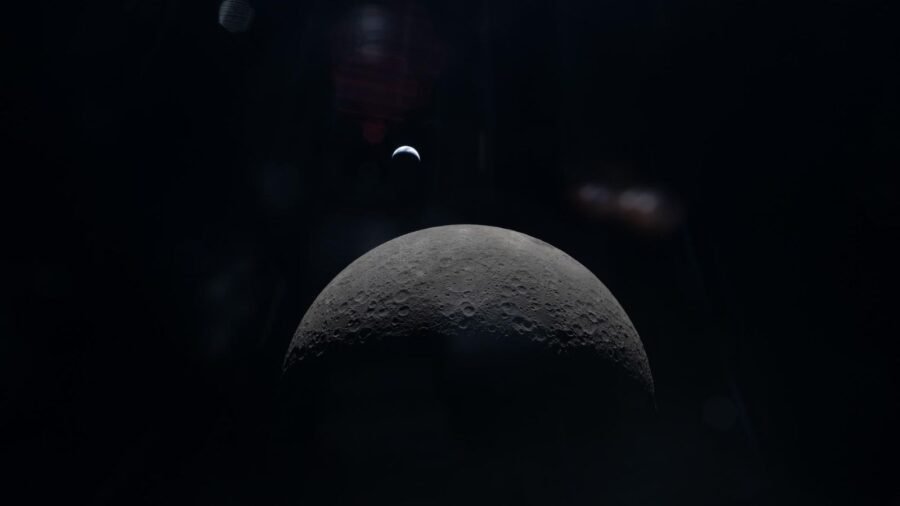
The Moon is entering a new era of exploration, with governments, space agencies and private companies planning increasingly ambitious missions to Earth’s nearest neighbour. But as lunar activity accelerates, scientists and space-law experts are raising a difficult question: could the new Moon race leave behind an unwanted legacy of rocket stages, debris and damaged lunar terrain?
The concern has gained fresh attention after an 8,800-pound (4,000-kilogram) SpaceX Falcon 9 rocket stage crashed into the Moon on August 5, sending a huge plume of lunar dust into the surrounding environment. The impact has renewed debate over how spacecraft and rocket hardware should be disposed of as lunar missions become more frequent.
Hundreds of tonnes of human-made material
Humanity has been leaving its mark on the Moon for decades. Around 200 tonnes of material from Earth have either been deliberately placed on the lunar surface or crashed into it since the beginning of the space age.
Some of these objects are historically significant. The descent modules from the six Apollo missions remain on the Moon, along with Soviet Lunokhod rovers and China’s Yutu lunar rovers. But not everything on the lunar surface was intentionally placed there.
Astronomer and space historian Jonathan McDowell has pointed out to Space.com that numerous rocket stages and other objects travelling between Earth and the Moon may eventually have ended up on the lunar surface.In 2022, for instance, part of a Chinese Long March 3C rocket struck the far side of the Moon. Four years later, the Falcon 9 upper stage followed a similar trajectory, crashing near Einstein Crater.
With more countries and private companies now planning lunar missions, experts warn that such incidents could become increasingly common.
Lunar exploration is expanding faster than its rules
The growing concern is not simply about litter.
McDowell described the current period as a “transitional moment”, as lunar exploration moves from an era dominated largely by the US and Soviet Union to one involving numerous countries and commercial operators.
Story continues below this ad
The problem, he said, is that governance has not advanced at the same pace. There are currently no comprehensive international rules governing lunar waste disposal, coordination of activities around the Moon or the management of discarded hardware.
The 1967 United Nations Outer Space Treaty provides some legal principles. Its Article IX requires countries to conduct space exploration in a way that avoids harmful contamination. But the treaty does not clearly define what constitutes “harmful” contamination on the Moon.
Marieta Valdivia Lefort, a policy officer at the Royal Astronomical Society in the UK, told Space.com that there is no dedicated international lunar “waste law” that establishes waste limits, designated disposal zones or requirements to remove objects from the lunar surface., told Space.com
That leaves an important gap as lunar traffic increases. A rocket crash can disturb more than one location. The Moon’s low gravity makes lunar impacts particularly problematic. At around 17 per cent of Earth’s gravity, the Moon cannot hold onto dust as effectively as Earth. Material thrown up by a large impact can therefore travel considerable distances before settling.
Story continues below this ad
McDowell said a major rocket impact should not necessarily be viewed as a local event. The dust could potentially interfere with future scientific experiments, equipment and infrastructure. That could become particularly significant if permanent human settlements are established on the Moon.
Future lunar bases may rely on sensitive scientific instruments, communications systems and other infrastructure. Repeated rocket impacts could contaminate equipment with lunar dust or interfere with experiments.
Scientists fear the loss of an untouched lunar record
There is another concern: science. The Moon’s surface contains a geological record stretching back billions of years. Natural impacts from asteroids and meteoroids are part of that record and help researchers understand the Moon’s evolution.
Human-made impacts are different. Lefort said rocket crashes introduce artificial material and can physically and chemically alter the lunar environment. Repeated disturbances could damage or obscure scientific evidence that researchers have yet to study.
Story continues below this ad
The issue becomes even more sensitive around locations considered historically or scientifically important.
Gregory Radisic, a space-law expert at Australia’s Bond University, argued that the recent Falcon 9 impact should serve as a warning before lunar activity becomes significantly more crowded.
He said it was largely “pure luck” that the rocket did not destroy an important experiment or scientific site.
Why did the Falcon 9 stage hit the Moon?
The Falcon 9 upper stage that crashed on August 5 had been left in a high-altitude orbit around Earth in January 2025 after helping send Firefly Aerospace’s Blue Ghost and ispace’s Resilience lunar landers towards the Moon.
According to McDowell, leaving the rocket stage in that region created an orbit that was difficult to predict over long periods.
The object was close enough for lunar gravity to repeatedly influence its trajectory, but not positioned in a stable lunar orbit. Over time, small uncertainties in its path multiplied, eventually putting it on a collision course with the Moon.
Story continues below this ad
The incident highlights a broader challenge facing future lunar missions: what happens to spacecraft and rocket stages after their primary mission ends?
A new norm for lunar missions?
The Moon’s growing importance makes the question increasingly urgent. Countries are preparing new robotic missions, while private companies are developing commercial lunar landers and other spacecraft. Plans for permanent infrastructure and human activity could further increase traffic around the Moon.
Experts argue that responsible disposal and better coordination need to become part of lunar mission planning before activity reaches that level.
McDowell said he hopes the recent crash will help establish a new norm in which rocket stages are not simply left in uncertain trajectories.
Story continues below this ad
As the Moon becomes the focus of a new space race, the challenge may therefore be to ensure that humanity does not repeat one of its most familiar habits on another world: arriving somewhere new and leaving its waste behind.

What is a kill switch, and why is it hard to build one for AI systems?
By Sohail Khan · 20 Sep
A smartwatch should fit your routine, not interrupt it. These five models go the extra mile
By Sohail Khan · 20 Sep
Nike Alphafly 4: 5 things (including the science) behind new marathon shoes
By Sohail Khan · 20 Sep