‘Let sport decide, not a spreadsheet’: Rohan Bopanna tears into India’s Asian Games tennis cuts
The government removed the names of five players from AITA's representation list submitted on July 3.
Updated on: Aug 24, 2026, 12:18:58 IST
Prefer HTon Google
Share via
Copy link
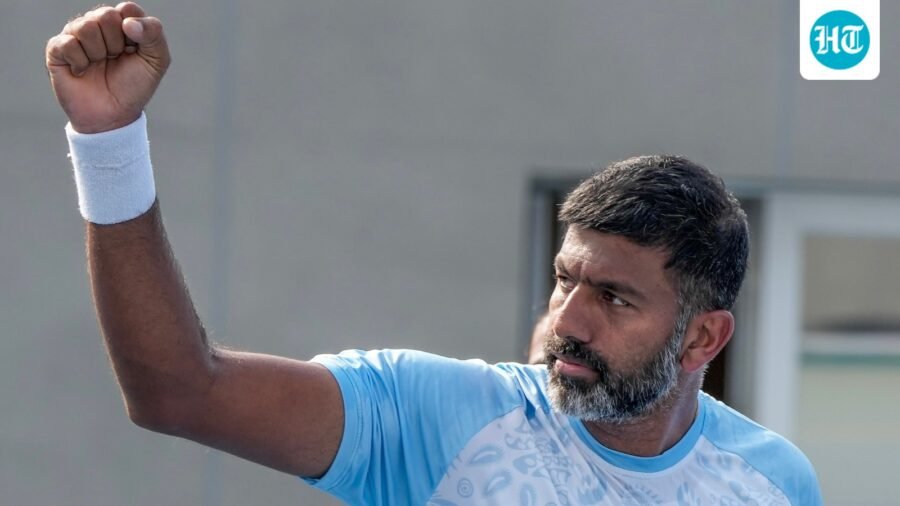
India tennis legend Rohan Bopanna on Sunday joined the growing criticism over India’s trimmed tennis squad for the upcoming Asian Games, throwing his weight behind the five players who have been removed by the Sports Ministry, from the original list of 12 submitted by the All India Tennis Association (AITA).
In a post shared on LinkedIn, Bopanna called for athletes to be given the chance to prove themselves on court rather than have their chances determined on paper by a medal-potential formula.
“I’m a proud Indian. And today, I want to speak up for these tennis players who deserve better. They didn’t ask for mercy. They asked for a chance,” Bopanna said.
The Sports Ministry, which released the list of India's 492-member contingent for the Asian Games in Aichi-Nagoya, which begins on September 19, removed the names of Manas Dhamne, Vaishnavi Adkar, Sahaja Yamalapalli, Vaidehee Chaudhari and Prarthana Thombare from AITA's representation list submitted on July 3.
This move has left India thin on their chances in women's singles, with not a single prospect remaining, which includes the removal of Sahaja, India's highest-ranked singles player.
Bopanna argued that the five players had already done what athletes are expected to do: compete, accumulate rankings and earn their place through results.
“Dhamne. Adkar. Yamalapalli. Vaidehee. Thombare. Five players — including India’s No. 1 and No. 2 in women’s singles, who earned their rankings the hard way. No shortcuts. No favors. They competed internationally, qualified and proved where they stand.”
The final squad approved has only seven players. Sumit Nagal and Dhakshineswar Suresh make up the men’s singles contingent, while Yuki Bhambri, N Sriram Balaji and Anirudh Chandrasekar have been picked in doubles. Ankita Raina and Rutuja Bhosale are the only two women retained.
The Sports Ministry's move has also exposed how tennis selections are assessed in the country. AITA argued that it sent the strongest contingent, and that the selection approach was event-specific, but the final sanction did not accept all of AITA’s recommendations.
AITA interim Secretary General Sunder Iyer, in an interview with the PTI, revealed that the government cited that the criteria for picking just seven of the 12 suggested was down to "sending only top-8 players in Asia." That explanation did not sit well with Sahaja, who was not only shocked, but also questioned the very logic behind it.
“There are instances where the underdogs beat the top players and win medals and win tournaments because it is a different set-up. Who knows, this may not be the right thing,” she said. “If we say that I will compete only when I am a seeded player, then what’s the point of going there? Why play tennis at all?”
That is where Bopanna’s intervention adds another layer to the debate.
“If outcomes are already decided, why have qualifications at all? Why rankings?” he asked.
Bopanna reckoned that such decisions often have a far more negative returns than just rejecting a player.
“This isn’t just a call about five athletes. It’s a message to every parent, every sponsor who backed them before the country did, who bet on merit and results, not on being pre-approved,” he said.
“Telling these players they’re ‘not medal prospects’ tells every one of those parents and sponsors: your judgment doesn’t matter here.”
For Bopanna, the very nature of sport makes predicting outcomes an imperfect exercise.
“Sport is the one arena where belief outruns prediction, where the written off rewrite the script,” he said. “You don’t build a sporting nation, or a sporting economy, by deciding in a boardroom who’s allowed to compete.”
The government’s final list has therefore created a debate that goes beyond the names omitted from the Asian Games squad. At its core is a question about who gets to decide an athlete’s medal potential — the federation that follows their performances on the international circuit, or a selection framework that seeks to narrow the field before the competition begins.
Bopanna’s answer is unequivocal.
“Let them walk onto the court. Let their years of work count for something.
“Let sport decide. Not a spreadsheet.”
See Less
Anahat, Abhay, Joshana — an Indian squash blend brewing medals in Japan
By Sohail Khan · 25 Sep
India win team silver in 50m 3P, draw a blank in individual final
By Sohail Khan · 25 Sep
India vs West Indies ODI, T20Is: Match schedule, squads, venues, live streaming info
By Sohail Khan · 25 Sep