Javed Akhtar recalls struggle in Bombay with 20 paisa left: ‘I went 3 days without food’
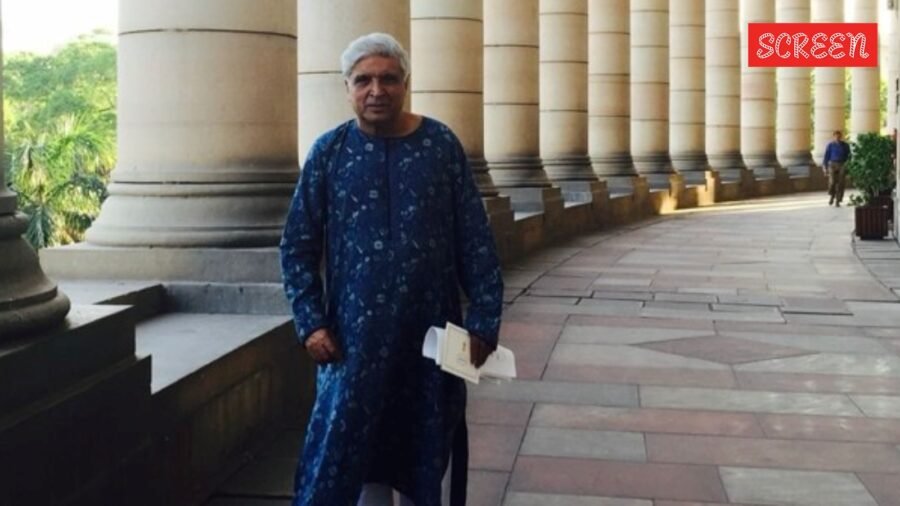
Javed Akhtar arrived in Bombay (now Mumbai ) in 1964 and spent six years struggling to find a foothold in the film industry. In a conversation with Let’s Talk with Devna G, the veteran writer recalled surviving on occasional ghost-writing jobs, going hungry for days and sometimes not knowing where his next meal would come from. Yet, he said, he never had a Plan B or any doubt that he would eventually succeed.
Javed Akhtar wanted to assist Raj Kapoor or Guru Dutt
Javed said he had decided while still in college that he would move to Bombay after graduation and assist either Raj Kapoor or Guru Dutt.
“I was very clear that after graduation, I would go to Bombay and assist a big director. I had a very short list of choices — Raj Kapoor or Guru Dutt,” he said.
But neither plan worked out.
Story continues below this ad
“Guru Dutt died perhaps six or seven days after I reached Bombay. And I saw RK Studio almost five years after coming to Bombay. Forget working with Raj Kapoor, I didn’t even see RK Studio for five years,” he said.
Akhtar arrived in Bombay in 1964 at the age of 19, hoping to become a filmmaker. He has previously recalled reaching the city with just 27 naya paisa in his pocket.
‘Sometimes I had food, sometimes I didn’t’
With no major break coming his way, Javed took up whatever writing work he could find, including ghostwriting for films.
Story continues below this ad
“I would sometimes get ghostwriting work — maybe 10 scenes for a comedian in a film. They would call me and pay me Rs 100 per scene. If there were 10 scenes, I would get Rs 1,000. That is how I somehow managed to survive. And thanks to my friends, who took care of me,” he said.
Javed said his real break came only in January 1970.
“Those six years were on and off. Sometimes I had shelter, sometimes I didn’t. Sometimes I could get food, sometimes I could not. But there was no Plan B,” he said.
There were days when he did not even know where his next meal would come from.
“Sometimes, when I woke up, I had no idea where I would get lunch or dinner from, or whether I would get anything at all. Quite often, I didn’t,” he said.
Story continues below this ad
Despite the hardship, Javed said he never once thought about ending his life.
“Quite often, I find it amusing that the thought of suicide never crossed my mind. I may have rejected it, but the thought itself never occurred to me. Never,” he said.
“There was no home I could go back to. I had been thrown out of the house.”
Why he never thought of sitting outside a dargah for food
Javed recalled knowing about a dargah in Mahim where people would arrange food for those sitting outside. Yet, even when he had gone hungry for two or three days, he never thought of going there himself.
Story continues below this ad
“I don’t know why that thought never occurred to me. It wasn’t that I rejected the idea. It simply never came to my mind,” he said.
Now, when he passes the place, he sometimes thinks, “I could have sat here. I had gone hungry for three days.”
Despite everything he went through, however, Javed said he never doubted that he would succeed.
The day he chose chana over a bus ride
Javed also recalled once writing around 10 scenes for a producer, who promised to pay him Rs 1,000 the next day. When he reached the producer’s office in Dadar, however, he found it locked.
Story continues below this ad
Living near Bandra-Khar at the time, Javed had just 20 naya paisa left in his pocket.
“With 20 naya paisa, I could either buy a bus ticket to Bandra and walk the rest of the way home, or I could eat something. I decided to eat,” he said.
He bought chana and began walking from Dadar towards Bandra. As he passed Kohinoor Mill, a thought struck him.
“I looked at Kohinoor Mill and thought the building may change. It may be redeveloped. Anything can happen. But I thought this mill would always be there. And one day, I would pass this road in my car and look at this place,” he said.
Story continues below this ad
Even then, he imagined the incident finding a place in his biography.
“I had complete faith that this interesting incident would be mentioned,” he said, before laughing at his younger self.
“That faith was stupidity. It was ignorance. It was not some great thing that I was farsighted about. It was stupidity that helped me. That stupidity saved me.”
Javed Akhtar eventually found success as one half of the celebrated Salim-Javed writing partnership. Along with Salim Khan, he wrote some of Hindi cinema’s most influential films, including Zanjeer, Deewaar, Sholay, Don and Trishul, before going on to establish himself as one of the country’s most acclaimed lyricists and writers.

Ranbir Kapoor celebrates 44th birthday with fans and paparazzi, cuts 3 giant cakes. Watch
By Sohail Khan · 28 Sep

Ranbir Kapoor built a career on flawed men, Ramayana asks him to play the ideal
By Sohail Khan · 28 Sep