How India plans to count caste this time — and what went wrong previously
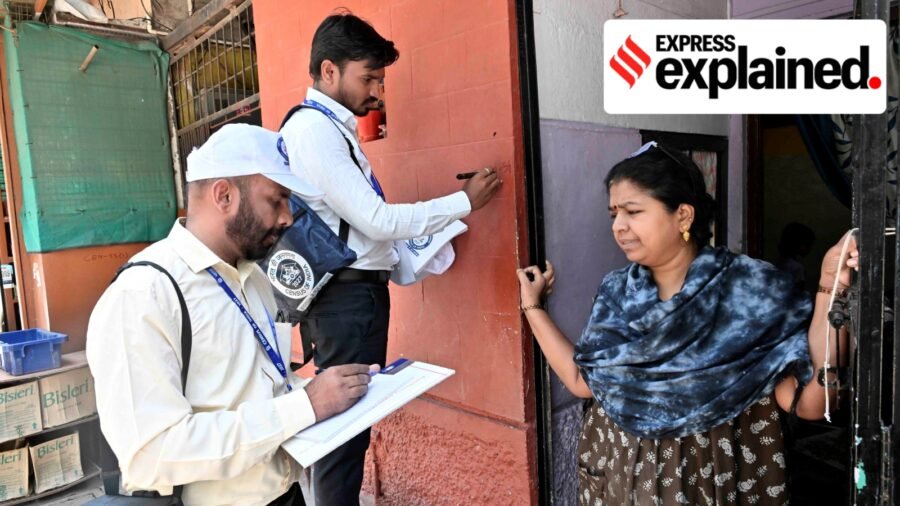
With the Registrar General of India deciding to use an “open-ended question on caste” rather than a drop-down menu of castes for the ongoing census to enumerate caste, it is likely to throw a plethora of entries pertaining to what may be a single caste. This could lead to an unwieldy list, as it happened in 2011 during the Socio-Economic and Caste Census (SECC) exercise.
“If you identify your caste by your surname, the census official will be duty-bound to include it as your caste. If he misspells your surname, that too will become an entry in the caste column,” a senior IAS officer told on condition of anonymity. He added that the Scheduled Caste (SC) and Scheduled Tribe (ST) census that happened with each census exercise has a comprehensive list of the SCs and STs, something that makes the data collected acquire greater meaning.
Indeed, the website of the Ministry of Social Justice and Empowerment lists 1,208 SCs, with different castes being in the category in different states. A Press Information Bureau year-end press release of 2022 lists exactly 730 STs in India.
The coming enumeration of caste will, however, have no pre-given list, and it will be up to the respondent to mention his or her caste, which will be noted by the census enumerator. The problem increases because a single caste may be known by many names. For instance, Rajput, Thakur, Singh, and Kshatriya may be used interchangeably by a respondent. However, Rajput in Bundelkhand region cutting through Uttar Pradesh and Madhya Pradesh may also mean the Other Backward Class Lodh community, and Singh is a surname cutting across castes and categories. The surname Verma, to give another example, can mean a Kayasth, a Kurmi, a Jat, or even a Sonar.
Until the 1931 Census, when the data of the last census that enumerated caste were released, the colonial state had also used the same method. A perusal of the 1931 Census report shows the problems faced by the British Indian government in enumerating caste, as it became an extremely subjective category.
The 1931 Census
In the 1931 Census report, there were instances of caste groups clubbing themselves as one caste, or sometimes even imagining a new category to define themselves.
Sections of the leather working caste among Dalits in Punjab decided to assume a new religious identity of Aad Dharmis (or Ad Dharmis), meaning people who belonged to the “original”, “pre-Aryan” religion of India. As many as 418,789, roughly the same number as Christians in Punjab at that time, enumerated themselves as Aad Dharmis, a category that did not exist in 1921.
Story continues below this ad
Significantly, the 1931 Census report also said, “… Ad Dharmis in most places form only a fraction of the Hindu depressed classes, and except in Jullundhur and Hoshiarpur, which are their strongholds, and Sheikhupura and Lyallpur colonies, Ad Dharmis nowhere outnumber the other depressed classes. In Montgomery the number of the two is about equal.”
Aad Dharmis constituted about 1.5% of the population of Punjab, and about a tenth of the population of the so-called low castes in Punjab in 1931. Significantly, literacy among the Aad Dharmis was more than twice as much as that among other members of the low castes — thus suggesting that the shift was primarily one among educated Dalits.
The same trend was noticed in other regions too, with names like Adi Dravida, Adi Andhras, and Adi Karnatakas coming up.
Problems of representation
The 1931 Census also offered examples of multiple castes consolidating into a single caste for bolstering their numbers or claiming a new social status.
Story continues below this ad
“The best instance of such a tendency to consolidate a number of castes into one group is to be found in the grazier castes which aim at combining under the term ‘Yadava’ the Ahirs, Goalas, Gopis, Idaiyans and perhaps some other castes of milkmen, a movement already effective in 1921,” the report said.
It also noted that “carpenters, smiths, goldsmiths and some others of similar occupations desired in various parts of India to be returned by a common denomination such as Vishwakarma or Jangida, usually desiring to add a descriptive noun implying that they belonged to one of the highest Varnas of Hinduism, either Brahman or Rajput”.
“Of the two, Brahman was usually desired at this census though in some cases a caste which had applied in one province to be Brahman asked in another to be called Rajput and there are several instances at this census of castes claiming to be Brahman who claimed to be Rajput ten years ago,” the report said.
1941, 1951 censuses
In the 1941 Census, though caste details were collected, caste was dropped from the final tabulation. M W M Yeatts, a Scot whose term as Census Commissioner coincided with limitations imposed by World War II, wrote, “The time is past for this enormous and costly table as part of the central undertaking… With so constricted a financial position and with so many fields awaiting an entry there is no justification for spending lakhs on this detail.”
Story continues below this ad
In the 1951 Census, in a newly independent India shaped by the ideals of equality and secularism, the government led by Jawaharlal Nehru decided there would be no caste enumeration.
2011 SECC
The 2011 exercise of the UPA government failed to produce usable caste data because of the problem of open-ended enumeration. The final dataset contained nearly 46.7 lakh distinct caste names, compared with the 4,147 castes recorded in the last comprehensive caste census in 1931. The Union government eventually withheld the raw caste data.
2023 Bihar caste survey
An IAS officer aware of the Bihar caste survey ordered by then Chief Minister Nitish Kumar told that the state officials had compiled a list of castes for the purpose, though it was a pen-and-paper survey. He said not having a list would create an administrative nightmare. “If some people say they are Bhumihar, and some others say they are Bhumihar Brahmins, there will come up two distinct categories in the absence of a list,” he explained.
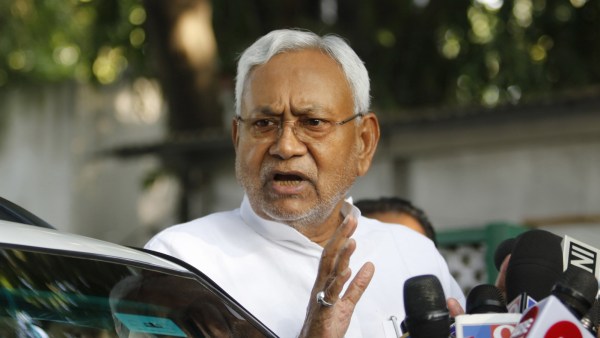 Former Bihar Chief Minister Nitish Kumar, who ordered the 2023 statewide caste survey. Photo: Anil Sharma
However, there were questions raised even after the Bihar caste survey data came out regarding the way the lists were prepared. Late BJP leader and former deputy CM of Bihar Sushil Modi had told this writer in an interview in October 2023, “No methodology was discussed with political parties or made public, despite demands for the same… In some cases like that of the Yadavs, a dozen sub-castes have been consolidated under one header, while in the case of the Kushwahas, their sub-caste of the Dangis has been enumerated separately. Even among the fishermen community, the Mallahs, there are 10-11 sub-castes that have been split and shown separately.”
The solution?
Story continues below this ad
Former Indian Council of Social Science Research chairman S K Thorat, who was a member of the expert committee to write a report on the caste data in Telangana, told that a pre-determined list was necessary.
“There are already SC, ST and OBC lists recognised by the government. All we need is a similar list of castes in the general category, and we will then have an exhaustive list,” he said. “It may still have a small margin of error, maybe 2-3 %, but that will actually minimise the error, rather than going for open-ended caste enumeration.”
He added that there can also be columns for “no caste” and “no religion” for people not identifying with these. Thorat also suggested that separate questionnaires be prepared for effective data focusing on the separate exclusions faced by the SCs (untouchability related) and STs (physical and geographical isolation).
He underlined that such a questionnaire for the OBCs was not required, as social and educational backwardness would anyway be captured by the census exercise.
Story continues below this ad
“There should be also be questions on the hierarchies and exclusions within the SCs and STs, as some castes are more deprived than others, and there is no sub-categorisation of SC and ST reservation to take the benefits to the most needy groups,” said O P Shukla, a Valmiki activist who has been raising his voice for sub-categorisation of the SCs.


AI bots are playing language games. Are humans even referees?
By Sohail Khan · 22 Sep