Harvard University warns international students to return to US before September 15 as new F-1, J-1 visa rules near
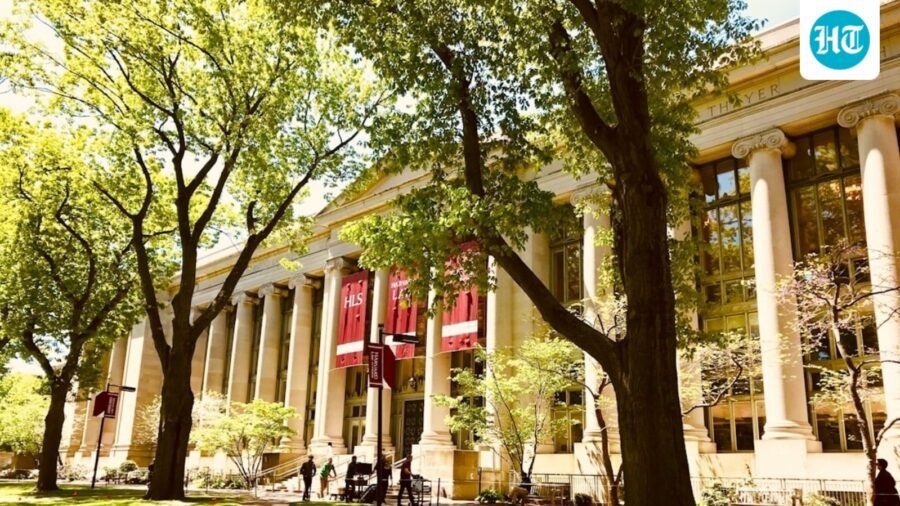
Harvard warns international students of significant changes to visa regulations effective September 15.
Published on: Aug 21, 2026, 09:23:15 IST
Prefer HTon Google
Share via
Copy link
Harvard University is advising international students and scholars to consider being in the United States before September15, when a sweeping Department of Homeland Security rule is scheduled to replace the long-standing “duration of status” system with fixed periods of admission for F-1 and J-1 visa holders.
The Harvard International Office said students and scholars already in the US when the rule takes effect will receive different treatment from those who leave the country and return after September 15, Harvard Crimson reported. The warning has particular significance for international students planning fall travel, as re-entry after the effective date could place them under the new framework.
The final DHS rule, published July 17, is scheduled to take effect September 15. It replaces admission for “duration of status,” under which students generally could remain in the US while maintaining their academic status, with a fixed admission period and an “Admit Until Date” on Form I-94. In most cases, the period will correspond to the program end date, subject to a four-year maximum.
Why September 15 matters for international students
Under the transition provisions, F-1 and J-1 students who are already in the US and properly maintaining their status on Sept. 15 can remain under the transition framework. For F-1 students, that can extend through the program end date or authorized post-completion work period, subject to the rule's four-year limits and transition provisions.
But international students who leave the US and return on or after Sept. 15 can be admitted under the new system. Their I-94 could carry a specific expiration date rather than the familiar “D/S” notation.
That distinction is why Harvard's International Office is urging students and J-1 scholars to think carefully about international travel before the rule takes effect.
Other universities have issued similar warnings. North Carolina State University, for example, says travel outside the US on or after September 15 can remove students from the transition arrangements and place them under the new fixed-date framework.
Four-year limit and new extension process
The biggest change is the end of the traditional duration-of-status system.
Under the current framework, an F-1 student admitted for D/S can generally remain in the country while maintaining the requirements of the program. Beginning Sept. 15, new admissions will instead carry a fixed “Admit Until Date.”
Students who need additional time to finish their program beyond the date on their I-94 will generally have to apply to US Citizenship and Immigration Services for an extension of stay. That represents a significant shift from the current system, where universities play a central role in extending program dates through immigration documents.
The rule also changes the grace period. F-1 students under the new framework will generally have a 30-day grace period after completing their program or authorized practical training, compared with the existing 60-day period. Students who remain covered by the transition provisions may retain the longer grace period under the applicable rules.
The new system also imposes restrictions involving changes to academic programs, transfers between institutions and certain changes in educational plans.
What Indian students should know
The changes are important for Indian students as those planning to travel to India or elsewhere around the September transition should check their individual I-20, visa and I-94 status and consult their university's international office before leaving the US.
Students who expect to need more time for their degree, OPT or STEM OPT should also understand how the new extension process could affect them. University guidance indicates that travel after Sept. 15 can change which transition provisions apply, making the timing of international travel an important consideration.
Lawsuit seeks to block the rule
The changes are already facing a legal challenge.
A coalition of higher education groups and labor unions has sued DHS, arguing that the department failed to adequately justify the overhaul and that the rule could harm universities' ability to attract and retain international students.
The plaintiffs have asked a federal judge for a preliminary injunction that would temporarily block the rule while the case proceeds.
Harvard is a member of two organizations involved in the lawsuit: the Presidents’ Alliance on Higher Education and Immigration and the Association of Independent Colleges and Universities in Massachusetts.
For now, the DHS rule remains scheduled to take effect on Sept. 15, 2026. Until then, universities are advising international students to pay close attention to official guidance, particularly before making international travel plans.
See Less