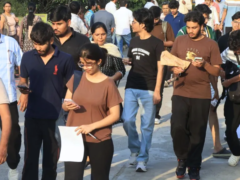
Handling of NEET protests under scanner, Bihar’s new anti-riots force will be armed with cameras too
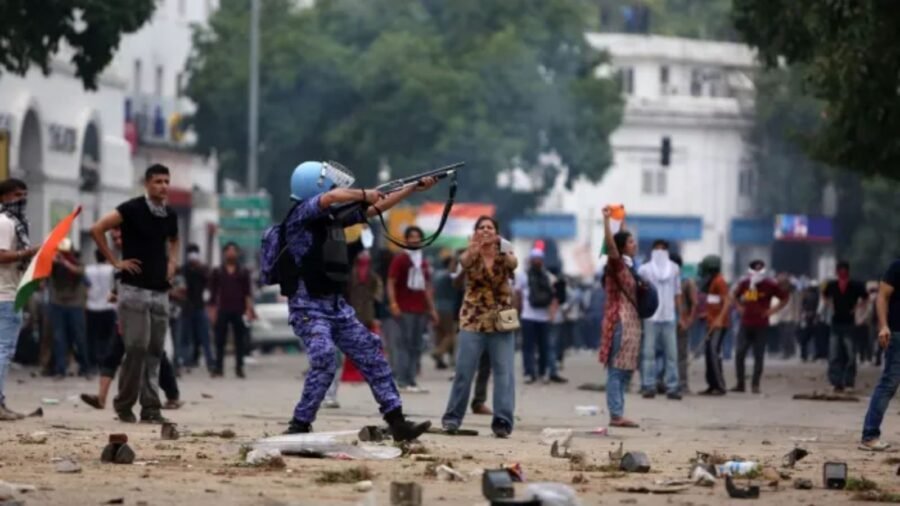
Trained police personnel, ambulance support, personnel for videography and a lathi unit – these will be part of the new District Anti-Riot Forces (DARF) that the Bihar Police Headquarters is planning for communal tensions, violent protests, road blockades, and attacks on government property.
A month after student protests over NEET paper leaks escalated, the Bihar Police is planning to set up a new anti-riot unit called DARF at the district and sub-divisional levels. According to officials, each unit will have an officer-in-charge, trained police personnel, trained women police personnel, medical or ambulance support, personnel for videography and documentation, communications and reserve personnel, and a lathi unit.
Each company will have three platoons of 47 personnel each, with drivers and wireless operators, a senior officer said. “Each platoon will have tear gas and lathi squads and will be equipped with two vehicles — one bus and one truck,” the officer said.
While the officer in charge will be responsible for deployment, discipline, communications, availability of protective equipment and records of action taken, the Deputy Superintendent of Police (DSP) Reserve will supervise the force. According to officials, the state has been divided into three categories, with 49 companies and 294 vehicles planned overall. Patna will receive three companies and 18 vehicles. Gaya, Rohtas, Muzaffarpur, Saran, Motihari, Bettiah, Darbhanga, Madhubani, Samastipur, Bhagalpur and Begusarai will each receive two companies and 12 vehicles.
Twenty-two districts under Category B will each receive one company and six vehicles: Nalanda, Aurangabad, Naugachia, Jehanabad, Bhojpur, Buxar, Kaimur, Vaishali, Sitamarhi, Siwan, Gopalganj, Saharsa, Supaul, Madhepura, Purnia, Katihar, Araria, Kishanganj, Banka, Munger, Jamui and Khagaria.
Arwal, Sheohar, Bagaha, Lakhisarai, Sheikhpura and Naugachia are listed under Category C with one platoon and two vehicles each.
Officers said that a 20-minute response requirement has been set. “On receiving information about a riot or violent situation, the district control room will circulate the alert and the unit will leave for the designated location within 20 minutes. At the scene, it will coordinate with senior police officers, continuously assess the situation and act according to law and procedure,” a senior officer said.
Story continues below this ad
Personnel will undergo one month of specialised training at their respective district police centres. Selected trainers will first undergo a Training of Trainers course at the Rapid Action Force Academy for Public Order in Meerut before training DARF personnel in their districts. Each platoon will also undergo a one-week refresher course every three months.
The move comes after a series of intense student- and youth-led protests over examination and recruitment issues, some of which escalated into clashes between protesters and security personnel. The announcement also comes as RJD leader and Leader of Opposition Tejashwi Yadav’s Raj Bhavan march in Patna on Wednesday was detained while on a protest march over the use of AK-47s during the police crackdown on student protests.
According to the police, 91 police personnel were injured, and 14 police vehicles were damaged when statewide protests over the alleged NEET-UG paper leak escalated into violence on July 25. Officials say that a Block Development Officer suffered injuries and lost an eye in Saran, while another official from Revelganj suffered serious head injuries and underwent surgery at Medanta, Patna.
Thirteen civilians were also injured in the protests – including three people who suffered bullet injuries. The police have admitted that aerial shots may have been fired from an AK-47 in Siwan, leading to the suspension of a constable.
According to officials, Bihar saw over 2,500 riot cases in 2025.


Scientists develop new way to tackle key quantum computing challenge
By Sohail Khan · 15 Sep
Xi, Modi reached ‘most important consensus’ that India, China should be partners: Wang Yi
By Sohail Khan · 15 Sep