Gulf states grow impatient with Trump’s Iran truce
Benchmarks
Nifty24,366.00-29.85
FEATURED FUNDS★★★★★
Motilal Oswal Midcap Fund Direct-Growth
5Y Return
23.43 %
Invest Now
Enter search text:
Business News›News›International›World News›Gulf nations growing impatient with Trump's diplomatic efforts regarding truce with Iran: Report
Read Today's Paper
Gulf nations growing impatient with Trump's diplomatic efforts regarding truce with Iran: Report
Synopsis
Persian Gulf allies express growing weariness with Iran peace deal negotiations. United States officials reject assessments of President Trump's diplomatic handling of Iran. The US is adopting a low-key approach towards Iran, avoiding immediate military action. Regional intermediaries are working to revive a memorandum of understanding for the Strait of Hormuz. Divergences exist among Gulf states regarding the appropriate course of action against Tehran.
 ANI
ANIWashington, DC: Discontent with Washington is mounting across the Persian Gulf region as regional allies are growing weary of the negotiations to secure a peace deal with Iran.
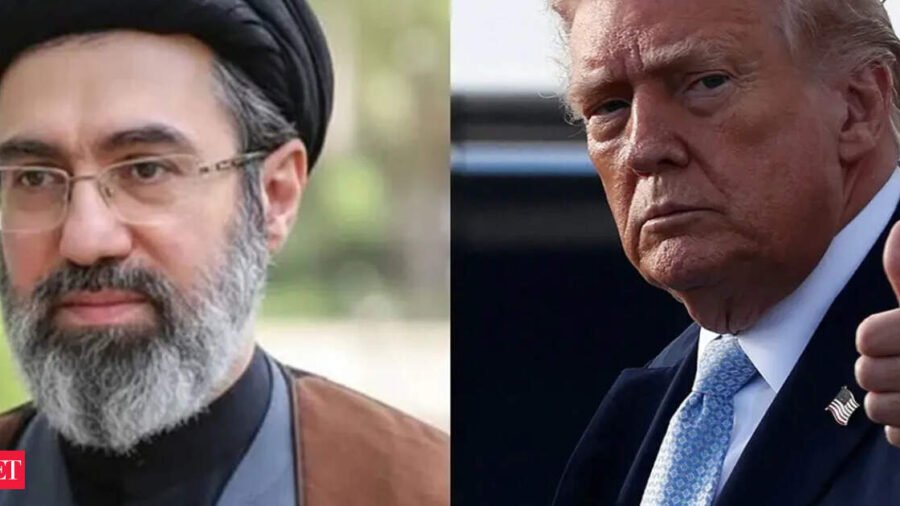
According to Arab and Western officials cited in a report by The Washington Post, the Gulf allies of the United States are getting increasingly skeptical of President Donald Trump's ability to handle the delicate diplomacy needed to achieve peace with Iran.
However, pushing back against the criticisms, Anadolu Agency, citing an official, reported that the White House has rejected the assessment, stating that Trump "has extraordinary relationships with all of our Gulf partners."
He further added, "We are only semi-negotiating with them. We are just watching Iran with its huge inflation and the fact they have no money."
This came after Trump had announced the cancellation of a planned attack on Iran earlier this month, subject to being able to rapidly make a deal with the Persian Gulf country, while noting that Israel had joined him in this commitment.
Trump said there have been urgent appeals from Middle Eastern Countries to hold off any attack as "perimeters of a deal has been agreed to". He asserted this would include immediate and total opening of the Hormuz Strait and an end to Iran's nuclear threat.
"Get to work, everybody, and get it DONE," Trump urged stakeholders, leaving the ball in the court of negotiators to translate the framework into a binding treaty.
Shortly after, regional intermediaries reportedly began attempting to revive a memorandum of understanding signed last month to ensure the strategic waterway remains open, fee-free, for 60 days, according to Israeli media.
The initial framework had previously collapsed due to conflicting interpretations, with Trump asserting the passage would remain open permanently, while Tehran maintained that the agreement preserved its sovereign control over the trade route.
Behind-the-scenes diplomatic pressure played a pivotal role in averting immediate conflict. Qatari officials engaged in intensive talks with Iran, the US, and Oman, ultimately informing Trump that Tehran had accepted a proposal regarding the strait. Concurrently, Saudi Crown Prince Mohammed bin Salman held a telephone call with Trump to urge against military action.
Subsequently, the Wall Street Journal also reported that divergences surfaced among Gulf states regarding the appropriate course of action. According to senior regional officials, the United Arab Emirates urged Trump to apply decisive military force against Tehran.
These officials argued that Iran's Islamic Revolutionary Guard Corps (IRGC) would refrain from making concessions unless Washington intensified military pressure, secured physical control of the Strait of Hormuz, and considered ground options.
Conversely, Saudi Arabia has consistently championed de-escalation. Riyadh had earlier resisted a US military proposal aimed at forcibly unblocking the Strait of Hormuz, sparking temporary friction with Washington before the kingdom eventually aligned with the effort.
According to the report, Israeli officials assessed that Trump prefers securing a diplomatic agreement over returning to full-scale warfare, which would exact high economic and security costs across the Middle East.
On the other hand, Iranian President Masoud Pezeshkian had accused Israel and the United States of attempting to "turn" Persian Gulf states against Tehran as the two allied nations are exploiting Iran's "internal challenges" amid the West Asia conflict.
"Israel and the United States are attempting to turn the Persian Gulf nations against us. We're working to prevent this. Of course, we face internal challenges as well, due to varying perspectives. And naturally, America and Israel are exploiting this situation," Pezeshkian said in an interview with Iranian state television.
Also read: Will declare Hormuz 'US territory' after defeating Iran: Trump
Adopting an overture towards neighbouring Gulf states, the Iranian leader emphasised Islamic solidarity during the broadcast.
Additionally, Iranian Foreign Minister Abbas Araghchi said that the ongoing bilateral negotiations between Iran and Oman are "completely separate" from the issue of reopening the Strait of Hormuz.
"We (Iran and Oman) may reach an outcome soon, but I want to emphasise that these negotiations and the reopening of the Strait of Hormuz are two separate issues. This is a technical negotiation concerning the designation of a maritime route," he reiterated.
Araghchi stressed that once the temporary route is finalised, any decision regarding the actual resumption of shipping through the strategic choke point will depend on Washington fulfilling specific obligations.
The developments come amid stalled negotiations between Iran, Oman, and the US aimed at reopening the Strait of Hormuz. Tehran has put forward new conditions, including lifting the US naval blockade and pulling back American forces stationed near Iran, as Washington continues to assert control over the critical maritime chokehold.
Add 

(You can now subscribe to our WhatsApp channel)
(You can now subscribe to our WhatsApp channel)
Read More News on
Trump Iran negotiationStrait of HormuzGulf nations diplomacyIran US relationsMiddle East conflictSaudi Arabia Iran relationsUAE military pressure IranIran economic situationAnadolu Agency reportIsraeli officials assessment


Enter search text:
Stories you might be interested in

Veteran filmmaker Raja Sen dies at 71
By Sohail Khan · 16 Aug
DRI uncovers Rs 2,500 crore duty evasion
By Sohail Khan · 16 Aug
Russia introduces new talent visa
By Sohail Khan · 16 Aug
Leave a Reply