‘Go systematically’: Why Bombay HC praised FDA crackdown but has pulled up its methods
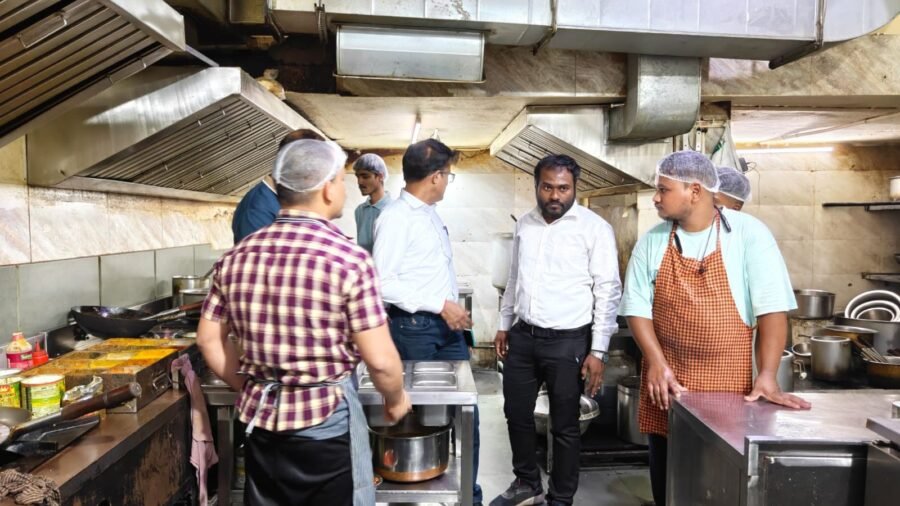
The Bombay High Court has backed the Maharashtra Food and Drug Administration’s crackdown on food and drug safety violations, but repeatedly questioned the manner in which it has been enforced. In a series of cases, the court has flagged disproportionate action, lapses in due process and an overzealous use of regulatory powers. In at least nine cases in June and July, benches in Mumbai, Nagpur and Aurangabad stayed or reversed licence suspensions, finding that immediate closure was not justified in the absence of a demonstrated public health emergency or where subsequent inspections showed that deficiencies had been rectified.
‘Going overboard, strange policies’
The court’s strongest rebuke came on August 17, when Acting Chief Justice Ravindra V Ghuge’s bench directed the FDA to pay Rs 5 lakh to Gurunanak Dairy and Sweets in Pune for delaying restoration of its licence for over 30 days despite a reinspection showing 98 per cent compliance.
“You are going overboard… This is plain and simple perversity, absolutely strange policies. You corner people. Once you clear 98 per cent compliance you say, now, go and file an appeal. What is this? Torturing citizens?” Ghuge said.
Story continues below this ad
The bench had issued a similar warning on August 3, saying it could impose costs on the FDA for not restoring the licence of Pawan Bar and Restaurant in Navi Mumbai despite a July 14 inspection finding 100 per cent compliance.
On July 29, the bench restored the licence of Park Inn by Radisson in Navi Mumbai, holding that two insects found during inspection did not justify continuing the suspension when the hotel had otherwise recorded 95 per cent compliance.
‘Trying to kill a mosquito with a sword’
The court’s concern over the FDA’s methods extended beyond restaurants and food outlets. On August 7, while hearing Amazon Retail India’s challenge to action against its Bhiwandi warehouse, the bench questioned whether the regulator intended to shut commercial establishments across Mumbai, Thane, Palghar, Pune and elsewhere to enforce its policies.
The FDA had acted against Amazon over allegations that expired and damaged food was being diverted into the retail market instead of being scientifically destroyed.
Story continues below this ad
The bench acknowledged the objective of the crackdown, but questioned the manner of enforcement. “We appreciate your (FDA’s) action and this is a laudable object and you deserve compliment. But go systematically,” it said, warning that the FDA was “trying to kill a mosquito with a sword”.
The court also held that the FDA could not cancel a food licence while an appeal against its suspension was pending before the competent authority.
‘Shooting first and asking questions later’
A day later, the court questioned the FDA’s approach while hearing Cadila Pharmaceuticals Ltd’s challenge to action stopping the sale of some of its medicines.
The FDA had alleged that Cadila’s Aciloc tablets used similar branding despite containing different active pharmaceutical ingredients, posing a potential risk of medication errors. It consequently ordered a recall of Aciloc 150, Aciloc 150 Plus, Aciloc 300 and Aciloc 300 Plus.
Story continues below this ad
While acknowledging the regulator’s powers, Acting Chief Justice Ghuge questioned how they were being exercised. “You have the power to use the sword, but you use it to kill a mosquito. That is the problem. Power has to be judiciously exercised,” he said.
He went on to say: “Shooting first and asking questions later is a rule of the Wild West which does not apply in the arena of law.”
Following the hearing, the FDA said the injunctions preventing disposal of the tablets would stand revoked and that it would follow due process, issuing a show cause notice, allowing sufficient time to respond, providing a hearing and passing a reasoned order.
‘Law has to be enforced impartially’
The court’s concern over the FDA’s use of its powers also surfaced in the case of Poornima Restaurant. On July 31, the bench compared the FDA’s findings with those of court appointed lawyers, who had reported “refrigeration in shambles” at the Mantralaya and Vidhan Bhavan canteens.
Story continues below this ad
“The law has to be enforced impartially,” the court said, making it clear that “none, especially VVIPs are above the law”.
Following the hearing, the FDA agreed to convert Poornima’s suspension into an improvement notice and carry out a fresh inspection.
The case also brought into focus the procedure for suspending food licences. Under Section 32 of the Food Safety and Standards Act, an improvement notice is generally required before suspension. Immediate suspension is meant for exceptional cases involving a public health risk, with reasons recorded in writing.
Similarly on the crackdown against milk collection centres and suppliers The Aurangabad Last month, stayed suspensions in six cases, observing that there was no public health exigency to justify such drastic action without first issuing improvement notices.
Story continues below this ad
But no relief for restaurant over analog paneer
The court has, however, drawn a line between procedural lapses and cases where it sees a substantive food safety concern.
On August 21, the High Court refused urgent relief to Udupi Swaad Restaurant in Wagle Estate, Thane, whose licence was suspended on August 11 after a June inspection found its paneer sample unsafe and sub standard.
“You also need to suffer first as you have made people suffer by eating this (analog paneer)… Poetic justice,” the court said.