From rural classroom to the stars: How government teacher from Rajasthan is helping students hunt asteroids
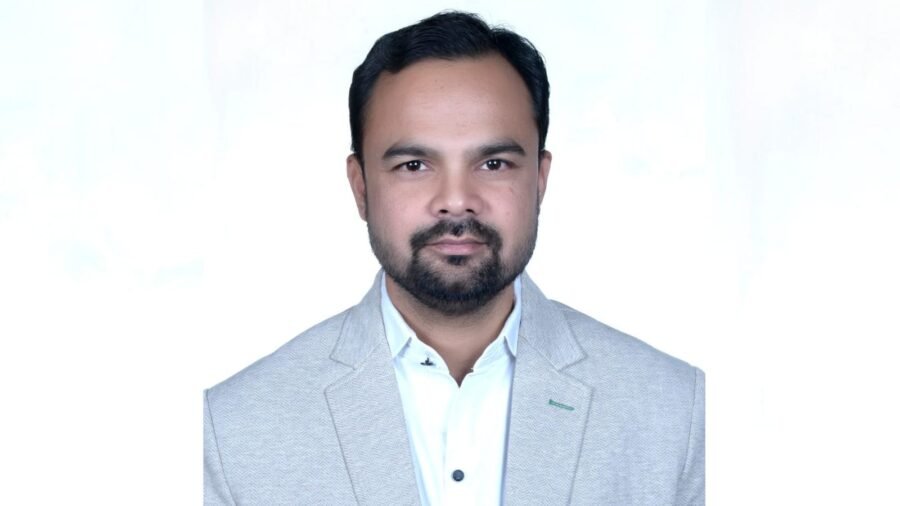
If there’s one thing Divyendu Sen lived by in his long teaching career, it is that curiosity mattered more than school scores. It was this belief that helped him drill his passion for learning into students for 14 years, and it was this that ultimately – and successfully – helped the students of rural Rajasthan identify asteroids through a NASA-supported citizen space campaign.
“I never looked at a student’s marks before involving them in scientific activities. If they were curious and willing to learn, they were welcome,” the 40-year-old Divyendu Sen, who teaches biology at the Mahatma Gandhi Government School in Jhalawar district’s Pachpahar, tells .
Sen is one of 48 educators who won the National Teachers’ Award this week — India’s highest honour for school educators. Sen will receive his award from President of India Droupadi Murmu on September 5, celebrated in India as Teachers’ Day.
Story continues below this ad
For the 40-year-old educator, this is yet another endorsement of his enduring belief – that it’s not geography but the hunger to learn that makes academic success.
“People often think advanced science can only happen in big cities or elite schools,” he tells . “Our experience has shown that children in villages are equally curious and capable if given an opportunity. All they needed was some guidance and I pushed them.”
It was with this belief that Sen, posted at his current school for the last three years, pushed his students to participate in the NASA-backed International Astronomical Search Campaign, a global citizen science programme that allows students, schools, and amateur astronomers around the world to discover real asteroids.
Through the programme, students from his school have, since COVID-19, identified 12 asteroid candidates, four of which have since been recognised as provisionally discovered.
Story continues below this ad
The achievement is particularly significant because many of the participating students come from rural backgrounds with limited access to computers, laptops and reliable internet connections. Among the asteroid candidates that Sen’s students have identified is one they plan to name in memory of seven children in the Jhalawar school collapse last year.
“The proposed name would combine the names of the seven children, creating a lasting tribute to them in the world of science,” he says.
Beyond astronomy, Sen has introduced several technology-driven initiatives in his schools. Over the past three years, he has converted educational content into audio format using student voices. He also serves as a district coordinator for the National Children’s Science Congress and has encouraged students to participate in science competitions and talent-search programmes. His students have repeatedly reached the state level in Vidyarthi Vigyan Manthan, one of the country’s largest science talent-search examinations, conducted in both Hindi and English.
At his school, he has also promoted the use of virtual science laboratories. Through digital platforms and touch-panel technology, students can perform and observe experiments virtually, overcoming the limitations of conventional laboratory infrastructure.
Story continues below this ad
But it wasn’t without its own set of challenges. According to Sen, the biggest challenge was convincing people of the importance of these initiatives.
“People used to ask me what the point was and whether it would make students employable. I had to convince them that children will learn computer skills. These programmes develop a scientific temperament in children, which might not have an immediate impact but can help in the long run,” he tells .