From petri dish to pasture: The story of Assam’s first IVF-born Lakhimi calf
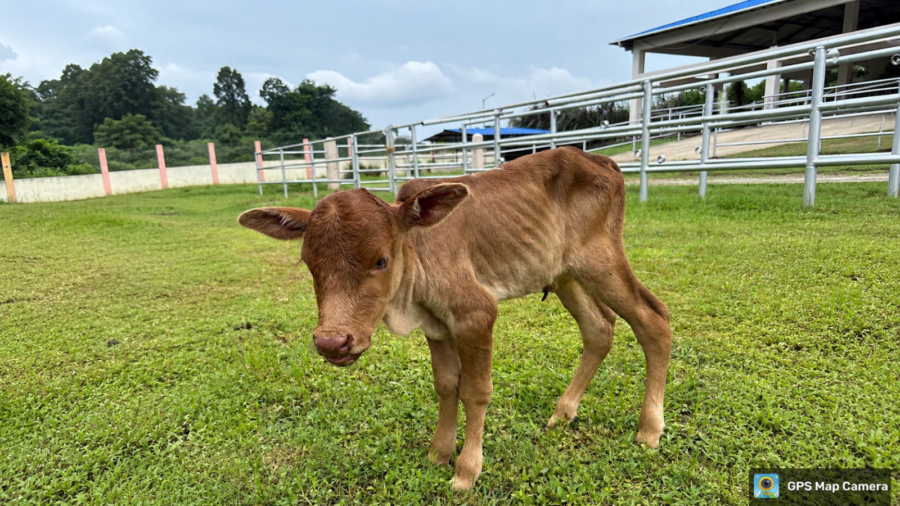
At first glance, there is nothing extraordinary about the little Lakhimi calf now being watched over by scientists in Assam. She is only a week old, healthy and, for now, busy doing what newborn calves do.
What is extraordinary is the story of her birth, which began in a laboratory’s petri dish. As you read about her journey, baby Lakhimi is busy coddling around with her ‘surrogate mother’ in the ‘bio-secured’ region of Assam Veterinary and Fishery University, Guwahati (AVFU).
Yes, you read that right. This adorable calf is being described as the world’s first IVF-born calf of Assam’s indigenous Lakhimi breed.
Story continues below this ad
“Lakhimi is a very native breed of Assam, and it has a very good capacity for disease resistance and heat tolerance,” a proud Dr Manna Baruti, in-charge of the IVF laboratory at AVFU, tells indianexpress.com.
The embryologist explains that these cows are relatively shorter and are relied on heavily by the local farmers for milk. “Think of them as medium-sized cows.”
What’s most interesting is how well suited they are to Assam’s weather conditions. These indigenous cows can also tolerate heat very well. Dr Baruti says this is especially notable given rising global temperatures.
Story continues below this ad
How exactly is the IVF helping?
Generally when the farmers cross-breed cattle, the original genetic characteristics of indigenous breeds gradually become diluted. Which means, they might not be so heat-tolerant and disease-resistant.
“In natural breeding, it may take seven generations for a pure in-bred Lakhimi cow with these exact traits to be born,” the embryologist explains.
Dr Bibeka Nanda Saikia, Dean, Faculty of Veterinary Science, AVFU echoes this.
“If there is natural breeding, you may not know the semen quality, whether some other quality may also come, it may not be Lakhimi. That is why this process is purely to secure the genetic makeup of Lakhimi inheritance,” he says.
Story continues below this ad
To put it simple, IVF helps ensure that a pure in-bred cow of Lakhimi breed is born. And the qualities that it already has, are not lost through generations of breeding and cross-breeding.
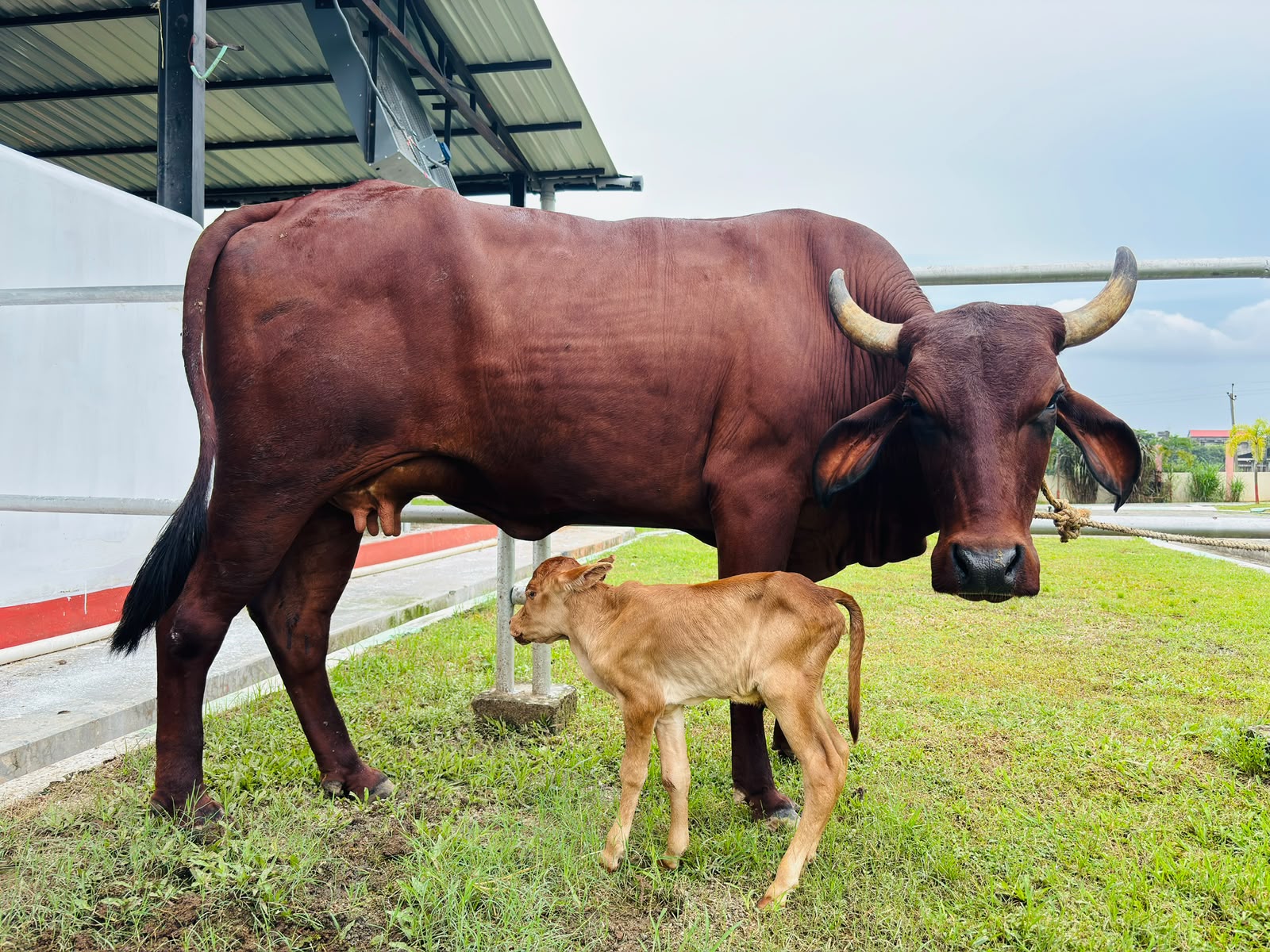 6-day-old Lakhimi calf along with its ‘surrogate mother’
So, how do you actually make an IVF calf?
Scientists collected an egg, or ovum, from a Lakhimi female and semen from a pure Lakhimi bull. The two were brought together in the IVF laboratory, where fertilisation took place.
The embryo was then allowed to develop for seven days before being transferred to a surrogate cow, which carried the pregnancy.
“After collecting the semen and the ovum from the male and female, it is processed in the laboratory, then it is implanted to a surrogate mother for developing the foetus,” Dr Saikia tells indianexpress.com.
Story continues below this ad
He further clarifies that once the embryo is transferred, the pregnancy carries on normally, with the same gestation period as in natural breeding.
So while the embryo’s first seven days happened in a laboratory, the calf herself spent the rest of the pregnancy developing inside the surrogate cow.
How one good animal could help produce many more
Today Assam has achieved something historic – a beautiful convergence of Sabhyata, Sanskriti & Srijan.
The world’s first IVF female calf of the Lakhimi breed – native to Assam – has been born at the Assam Veterinary and Fishery University.
This landmark achievement opens new… pic.twitter.com/9KaVytPO11
— Himanta Biswa Sarma (@himantabiswa) August 22, 2026
https://platform.x.com/widgets.js
A cow can naturally produce only a limited number of calves during her lifetime. With IVF and embryo transfer, scientists can create multiple embryos from selected animals and transfer them to different surrogate cows.
Dr Baruti gave a simple example: if seven embryos are produced in one cycle, those seven embryos can potentially be transferred to seven surrogate mothers.
Story continues below this ad
“So from one animal, seven animals are benefited. Seven farmers are benefited,” he explains.
That means the genetics of one particularly valuable animal can potentially be spread much faster.
The numbers from the Assam laboratory show that this is already more than a one-calf experiment. Dr Baruti reveals that so far, the team has produced nearly 182 embryos, of which around 81 have been transferred, resulting in 37 pregnancies.
The university received the project in 2023 under the Centre’s Rashtriya Gokul Mission. Its objectives include conserving indigenous breeds, transferring elite embryos to farmers and providing good bulls to semen stations for artificial insemination. The project was inaugurated by Prime Minister Narendra Modi on October 11, 2025.
Story continues below this ad
Getting the laboratory ready
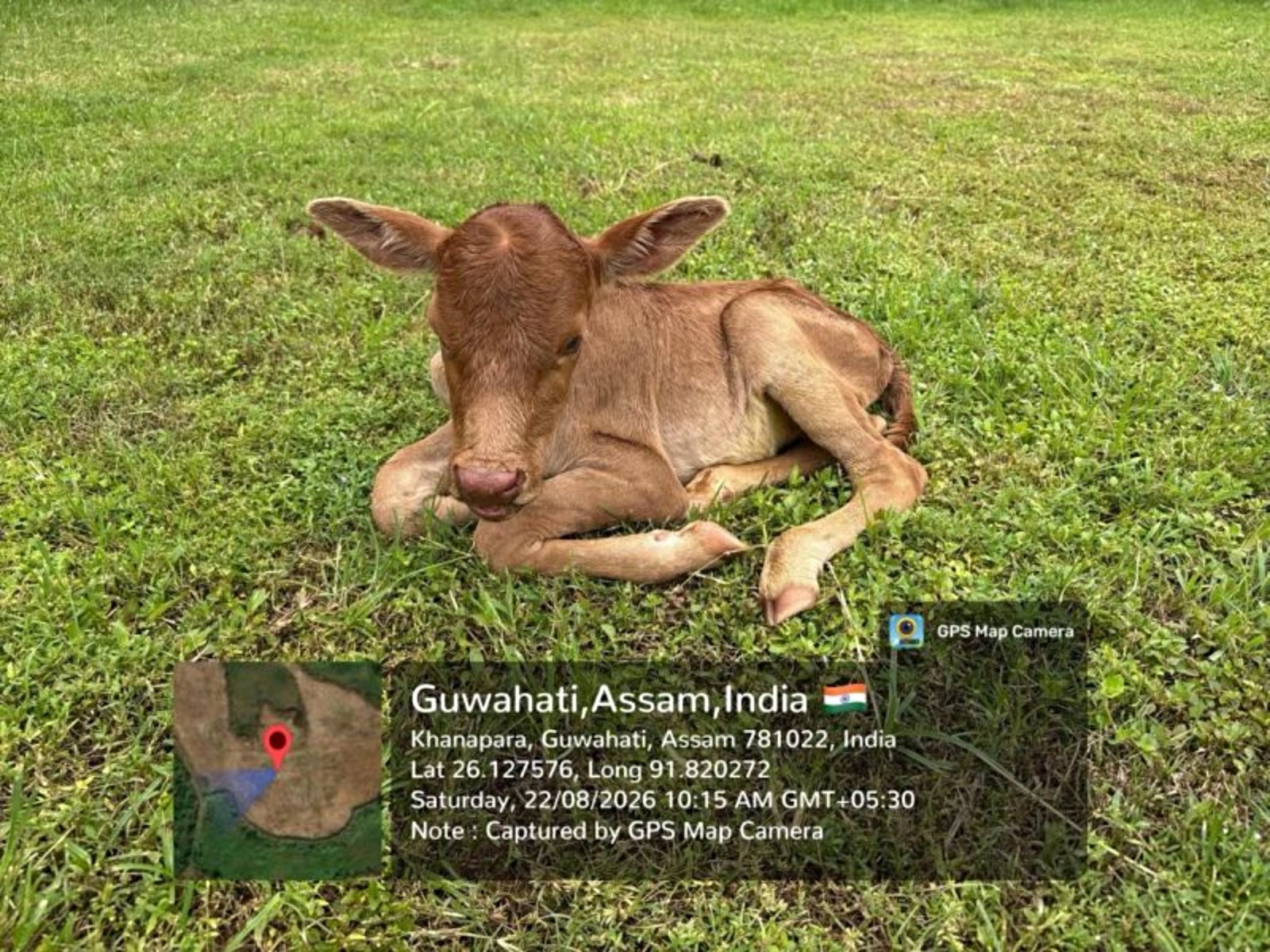 The six-day-old IVF-born Lakhimi calf is in the pink of health, as confirmed by the research team
Before the team could begin producing embryos, the IVF laboratory itself had to be stabilised and calibrated.
“We have taken time for that. Then when I saw that our lab is doing very good then we started these things,” Dr Baruti notes.
Dr Saikia also assures that it is a very “sophisticated” and “bio-secured” laboratory where every precaution is being taken.
Now, the team expects more calves from embryos already produced. The team looks hopefully towards some 30 upcoming IVF babies ready to populate the region.
Story continues below this ad
What happens next?
For now, the little Lakhimi calf is being kept under close observation. Baruti said she is healthy and being cared for in a biosecure area.
“Calf is very good. It is healthy.”
But the project is looking much further ahead.
Embryos produced now can be stored and used in future reproductive cycles. Selected bulls can contribute semen for artificial insemination, while more embryos can be transferred to surrogate cows.
The second part of the project is about helping farmers access elite animals. Baruti said embryos with desirable traits can be transferred to farmers so they can benefit from better cattle genetics and potentially improve milk production.
And for the scientists behind the programme, the satisfaction ultimately comes down to what happens outside the laboratory.
Story continues below this ad
“Sometimes farmers come to me and they hug and they become very happy and that is a blessing for us.”
For a project built around IVF, embryo transfer and carefully selected genetics, the goal is straightforward: preserve what makes Lakhimi cattle special and help those traits survive into the next generation.
Explore more captivating stories about pets and animals here, and make us your daily stop for the latest from the animal kingdom.
Letters to The Editor — September 26, 2026
By Sohail Khan · 25 Sep
Revisiting India’s nuclear doctrine without revising it
By Sohail Khan · 25 Sep
The case for accountable lottery regulation in India
By Sohail Khan · 25 Sep