From hospital charges to emergency care: What Maharashtra’s new healthcare Bill proposes
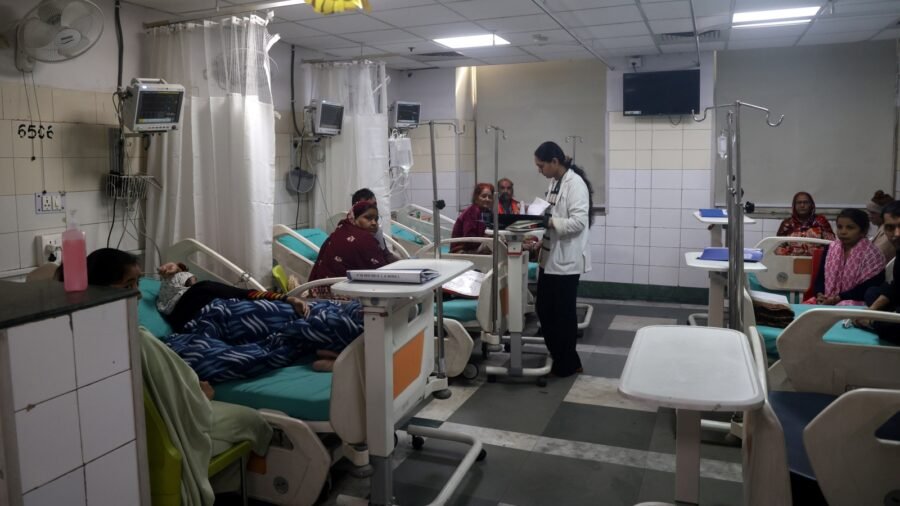
From multilingual medicine prices on display to a no-deposit mandate for emergency cases to itemised bills – these are some of the key features of Maharashtra’s new healthcare Bill that seeks to replace the 77-year-old law and regulate hospitals, clinics, laboratories and diagnostic centres.
The Maharashtra Clinical Establishments (Registration and Regulation) Bill, 2026, introduced in the Assembly on July 3, seeks to make registration mandatory, set minimum standards and strengthen patient rights. However, even as the Bill seeks to make hospital prices transparent, it does not regulate them, the health rights groups have highlighted.
They have also raised concerns over grievance redressal and the omission of some patient protections introduced in 2021.
Q) What will the new healthcare Bill cover?
Maharashtra’s new healthcare Bill will cover hospitals, nursing and maternity homes, clinics, laboratories and diagnostic centres, and provide services under recognised systems of medicine, including allopathy, Ayurveda, homoeopathy, Siddha and Unani.
X-rays, ultrasonography, CT scans, MRI and PET scans will also be covered under the new healthcare law.
The Bill also proposes a Maharashtra State Council for Clinical Establishments to set minimum standards. Registration has been made mandatory under this.
Q) Registration mandatory – How will it work?
The Bill provides for provisional and permanent registration, renewal and cancellation.
Story continues below this ad
Permanent registration will be valid for five years and will require compliance with prescribed standards for infrastructure, services, staff, records and reporting.
Establishments will also be classified, with the procedure to be prescribed by the government. Details submitted for permanent registration can be opened to public objections for 30 days.
Authorities will be empowered to inspect establishments and impose penalties.
Appeals will be allowed against decisions such as refusal, non-renewal or cancellation of registration.
Story continues below this ad
Q) No emergency fund – Patients’ rights explained
Under the new proposed healthcare rules, hospitals will have to stabilise emergency patients and provide basic life support even if the patients cannot pay for it. They will also have to follow “Golden Hour” protocols before referral, where required.
The Patient Rights Charter provides for information on diagnosis, treatment and estimated costs, access to medical records, informed consent and a second opinion.
It also covers privacy, dignity and non-discrimination.
Q) Will the Bill control hospital charges?
No. While the new healthcare Bill focuses on transparency, price control has not been made a part of it.
Hospitals will have to display rates in Marathi, Hindi and English and publish them online. They cannot charge more than the displayed rates and must provide itemised bills.
Story continues below this ad
But the Bill does not prescribe standard or maximum rates for hospital services.
Q) Why Maharashtra needs new healthcare law?
The government says the Maharashtra Nursing Homes Registration Act, 1949, is outdated. The need for a broader law has been discussed for more than a decade, said Dr Abhay Shukla, a public health specialist.
The Covid-19 pandemic also brought renewed focus on private healthcare regulation and hospital charges. Maharashtra amended its Nursing Homes Registration Rules in 2021 to include provisions on patient rights, rate displays and grievance redressal.
Q) Why is JAA objecting?
The Jan Arogya Abhiyan (JAA) says the Bill drops several protections contained in Maharashtra’s 2021 rules, as it flags the absence of safeguards against withholding a deceased patient’s body or detaining patients over unpaid bills, provisions for a female attendant during examination, explicit protection for people living with HIV, display of doctors’ qualifications and registration numbers, and a proper discharge summary.
Story continues below this ad
It also says the Bill does not retain the patient’s right to obtain medicines or diagnostic tests from a provider of their choice.
JAA says the Bill lacks a clear district- and state-level grievance mechanism. The 2021 rules provided for grievance cells and toll-free numbers in every district and city, with complaints involving admitted patients to be heard within 24 hours.
The proposed Bill has no comparable system, JAA says. It wants district-level grievance committees with representation from patients, women’s groups, nurses, doctors and civil society.
Q) What happens next?
The Bill is before a Joint Legislative Committee (JPC), which is examining suggestions and objections from stakeholders
Story continues below this ad
The JPC can recommend changes to the Bill. It is expected to be taken up during the upcoming winter session of the state legislature.

Standing Committee meeting postponed amid corporators’ apprehensions of arrest
By Sohail Khan · 20 Aug
BMC to amalgamate Lower Parel municipal plots with SRA scheme for integrated redevelopment
By Sohail Khan · 20 Aug
Ghatkopar woman’s murder: Mother-in-law paid maid ₹3 lakh for killing
By Sohail Khan · 20 Aug
Leave a Reply