‘Flying coffin’? IAF veterans defend MiG-21’s safety record in Netflix’s The Last Salute
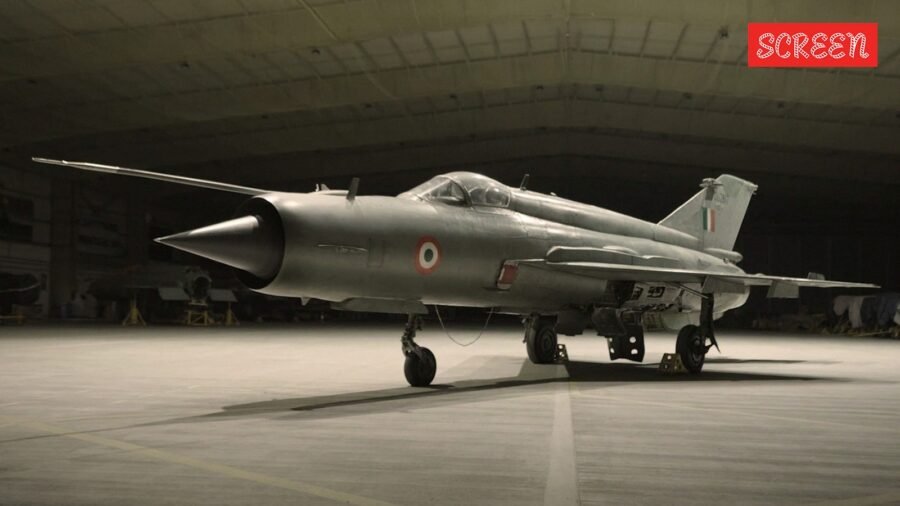
The Last Salute: A Love Letter to MiG-21, which is now streaming on Netflix, celebrates the iconic fighter jet’s 62-year journey with the Indian Air Force (IAF). Directed by former Air Force officer Kushal Srivastava, the documentary looks at the aircraft through the eyes of the generations of pilots who flew it, taking viewers through its combat history, its triumphs and the safety concerns that have followed it over the years.
The MiG-21’s legacy in India has always been complicated. It was one of the IAF’s most important fighter aircrafts, serving through wars and major conflicts, but its long service was also marked by a significant number of accidents. Over the years, that history earned it the notorious labels of “flying coffin”.
In The Last Salute, however, several former Air Force officers strongly push back against that image. Their argument is that MiG-21’s safety record and the circumstances surrounding those accidents need to be viewed in the context of how extensively the aircraft was flown.
Story continues below this ad
BS Dhanoa recalls his experience flying the MiG-21
For Air Chief Marshal (Retd) BS Dhanoa, his own experience flying the MiG-21 is central to his defence of the aircraft. He says he flew the fighter extensively without ever being involved in an accident.
“I myself flew 1,000 hours on a MiG, which is a hell of a lot. It was accident-free. The squadron that was under me had only two accidents. Both accidents were bird hits. In a single-engine aircraft, if you have a bird hit, what can you do?”
He points out that neither incident ended in the loss of a pilot.
“But the best part of the story is that when the bird hits took place, both pilots ejected in time, the ejections were safe, and they came back to flying.”
Story continues below this ad
Dhanoa says it is unfair to reduce the MiG-21’s entire history to its crashes.
He said, “It is incorrect to say that the MiG-21 had a very bad safety record. If you talk of statistics, I think 2.95 or something per 100,000 hours is the safety record of the MiG-21, which is the same as the MiG-23BN. It is lower than that of the MiG-27 and lower than that of the Hunter, and much lower than that of the Gnat. So, comparatively, the MiG-21 is a more reliable aircraft.”
He then recalls how pilots were trained to handle emergencies and keep control of an aircraft even when things went wrong.
“In fact, two of my youngsters received the Chief’s Commendation for landing the MiG-21 with hydraulic failure. That is the kind of skill that we used to develop and the time we used to devote. To say that the aircraft was accident-prone — the aircraft was not accident-prone.”
Story continues below this ad
Air Marshal (Retd) NJS Dhillon says the ‘flying coffin’ image needs to be challenged
Air Marshal (Retd) NJS Dhillon explains the mindset pilots were expected to have whenever they entered the cockpit.
He said, “You must consider yourself a pessimistic optimist. Pessimistic that you will be faced with an emergency at a critical stage of flying. Optimistic that you have a good amount of knowledge, you have prepared yourself, and you will be able to take the right action and handle the emergency in the desired manner.”
Dhillon says the aircraft should not be judged solely by the reputation it acquired in the media.
Story continues below this ad
“I think it will be unfair to the MiG-21, to the Air Force and to the thousands of pilots who have flown the MiG-21 if we don’t contest the image that the media has projected of the MiG-21, calling the MiG-21 a ‘flying coffin’ and a ‘widow maker.’”
He adds that the aircraft’s extraordinarily long service with the IAF itself tells part of the story. “The fact of the matter is, if the media’s projection of the MiG-21 was even partially true, then the Indian Air Force would have retired this aircraft a long time back and would not have used this aircraft for more than six decades.”
Air Vice Marshal Prashant Mohan says criticism can be demoralising
Air Vice Marshal (Retd) Prashant Mohan makes a comparison with road accidents to explain why he believes such criticism can affect those who operate and maintain military aircraft.
“I just want to ask them: when a car crashes on the highway and, unfortunately, people die, how many times do our TV channels criticise the car company? This should not be said. It becomes very demoralising for people,” he said.
Story continues below this ad
Squadron Leader Priya Sharma says pilots need to understand the machine
Squadron Leader Priya Sharma, one of the pilots associated with the MiG-21’s final chapter, says criticism of the aircraft can be particularly painful for those who have actually flown it.
“It hurts when people make comments like that or say that it should be stopped. You have to deeply understand an aircraft, understand a machine, before you make a statement. As a MiG-21 pilot, I think you should take your chance of flying this aircraft.”
‘It is like clipping somebody’s wings’
The IAF inducted the aircraft in 1963 and eventually operated more than 700 MiG-21s across different variants. The final two MiG-21 squadrons were decommissioned in September 2025, bringing an end to more than six decades of service.
For Wing Commander Sunil Yadav, it feels like losing something deeply familiar.
Story continues below this ad
“It is always difficult to say goodbye to your girlfriend. If you ask us, we would love to continue flying this aircraft. It is like clipping somebody’s wings. It is very sad to say goodbye. We don’t want to say goodbye, but we have to.”
Why was the MiG-21 called a ‘flying coffin’?
The MiG-21 was involved in the highest number of crashes among IAF fighter aircrafts. Government data cited by has recorded more than 500 MiG-21s crashing over six decades, with more than 170 pilots losing their lives in the accidents. More than 20 aircraft had crashed between 2010 and 2022, while 38 crashed between 2003 and 2013 alone.
The causes of the crashes varied, including technical defects, human error, bird hits and spatial disorientation. The number of accidents over the years led to the MiG-21 being labelled a “flying coffin” and “widow maker.”