Five years on, Taliban are still at a fork in the road
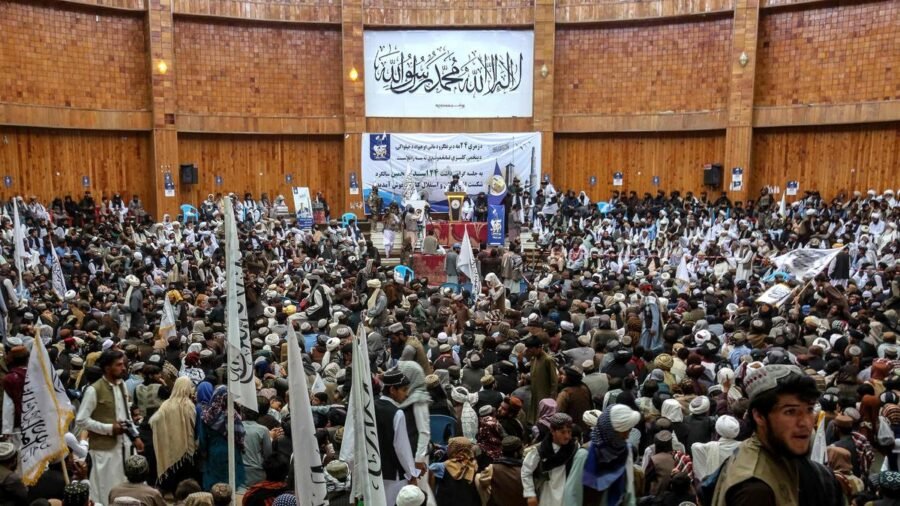
For a people long regarded as at the crossroads of civilisations, the past five years of the Islamic Emirate of Afghanistan (IEA) under Taliban rule resemble the backwaters. After 47 years of bloodletting, terrorism and foreign occupation, the current “stability” is a respite. But the ongoing time-freeze only postpones an eventual transition to modern universality. So far, the process has been glacial and selective, causing pain and uncertainty. It is time to take stock of the past half-decade and try to fix the broad contours of a foreseeable future.
A more stable country
The IEA’s overall performance since the August 15, 2021 takeover has been a binary. On the positive side, though the IEA 2.0 transition was as chaotic as the IEA 1.0 transition in 1996, it spared the country from mass retribution. Afghanistan is now largely stable and secure. The country’s “Badlands” were long associated with militant groups such as al-Qaeda. Their 9/11 attacks unleashed two decades of bloody U.S. retribution on both al-Qaeda and the IEA 1.0. The IEA 2.0 has disallowed the use of their territory for operations against other countries. During the past five years, an estimated 5.7 million refugees from Pakistan and Iran have returned to Afghanistan. While this return of an eighth of the country’s population has exacerbated the penury, the government has managed it reasonably well. These unmistakable shifts from the ruinous policies of the previous Islamic Emirate (1996-2001) have partially mitigated the world’s concerns.
But many of the IEA 2.0 domestic policies are a carbon copy of IEA 1.0; its socio-political contrast with the preceding western-designed Republic was widely perceived as a huge regression. To the universal abomination, Taliban 2.0 swiftly reinstated the harshest rules in the contemporary Islamic world: a ban on music, no education for girls beyond class six, gender segregation, lifting the ban on child marriages and a narrow power base shutting out women, non-Pashtuns and ethnic minorities. The Taliban theocrats defended these measures, citing Islamic Sharia, Sunni Deobandi Islam, Hanafi jurisprudence and Pashtun traditions.
The West, in particular, felt deeply betrayed by the Taliban’s cynical disregard for their commitments under the transitional accord signed in Doha in 2020 to pave the way for U.S. and North Atlantic Treaty Organization (NATO) troop withdrawal. Two decades of the U.S. military campaign against the Taliban, which caused 6,379 deaths and cost $2.26 trillion in expenses, now seem in vain. Despite intense Pakistani lobbying for the IEA 2.0 to be accepted and formally recognised, there was global unanimity to withhold both till such draconian policies were moderated. The global community’s response to the Taliban’s re-takeover was framed by the United Nations Security Council resolution 2593 adopted on August 30, 2021. It demanded, inter alia, that Afghan territory not be used for terrorism and that human rights, including the rights of women, children, and minorities, be upheld. It also encouraged all parties to seek an inclusive, negotiated political settlement, with the full, equal, and meaningful participation of women, that responds to the desire of Afghans to sustain and build on the gains Afghanistan had made over the preceding 20 years, in adherence to the rule of law. Five years on, this resolution remains a cornerstone of global policy on the IEA.
The IEA 2.0’s political architecture of an uncodified unitary theocracy evolved informally from the Quetta Shura, later called Rahbari Shura. It received the endorsement of 3,000 Afghan clerics and tribal leaders under the aegis of a Loya Jirga (Grand Assembly) held in Kabul in mid-2022. Accordingly, Hibatullah Akhundzada was appointed Supreme Leader (Amir al-Mu’minin), with combined powers as head of state, commander-in-chief, and religious leader of Afghanistan. He heads the 26-member Leadership Council, the IEA 2.0’s top decision-making body, which includes Prime Minister Hassan Akhund and three Deputy Leaders. Its decisions are implemented by the Cabinet. The IEA 2.0 has often cited the Holy Koran as its Constitution and Hanafi jurisprudence as its common law.
Fragile economic progress
The latest available figures are tentative, but point to a relative improvement in the Afghan economy. Draconian measures have curbed rampant corruption and smuggling. Thanks to better fiscal discipline, the national currency, the Afghani, is stable. Consumer inflation was 2% in 2025. The Nominal GDP is $19.66 billion, contributed by services (49%), agriculture (26%), manufacturing and mining (13%) and construction (12%). Its growth rate for 2025 was 4.3% and is expected to be 2.3% in 2026. The country’s GDP dropped by nearly 20% following the Taliban’s return to power. The GDP/capita is only $448, less than one-sixth of India’s.
Nearly half of Afghanistan’s 49 million population lives under the national poverty line, facing acute food shortages. Still, most western official development assistance (ODA) remains suspended, and many multilateral agencies restrict their funding. Some non-governmental organisations have continued to help mitigate the dire situation. The population rose by 11% in 2025, largely due to immigration. This led to a 4% decline in GDP per capita despite healthy economic growth. Afghanistan has a Human Development Index (HDI) score of 0.496, among the world’s lowest. Formal unemployment is put at 13.3%, with most women and a quarter of young men jobless. While foreign trade reached $13.9 billion in 2025, Afghan exports barely cover 15% of its imports. Despite a rise in tax revenues, negligible foreign investments and declining external grants leave the government with insignificant funds for welfare or decrepit infrastructure mauled by nearly five decades of instability. After the formation of IEA 2.0 in 2021, the U.S. froze $9.6 billion worth of Afghanistan’s foreign assets.
During the past five years, the IEA 2.0 has sought international acceptance and legitimacy without undertaking the necessary domestic reforms. Nevertheless, the ostracising consensus has frayed, and realpolitik has spurred engagement. The IEA now claims to have 40 active diplomatic missions abroad and more than 20 countries represented in Kabul, even as Russia is so far the only country to have recognised the IEA and opened an embassy in Kabul. Pakistan, China, Iran and India have established links with Kabul at variously nuanced de jure levels without extending formal recognition. Some trade and mineral exploitation transactions have also been made. Iran, the Central Asian Republics, the Gulf countries and Türkiye have extended trade and logistical links. With the solitary exception of neighbouring Pakistan, with which it is in conflict, Afghanistan’s links with most regional countries are stable.
New Delhi’s Afghan engagement
India was initially sceptical of the IEA 2.0, but has since come full circle. New Delhi continues to conform to global norms by not having full diplomatic recognition, without preventing substantive bilateral engagement. Following the Afghan Foreign Minister’s successful visit to India in October 2025, three other Afghan Ministers have also visited India. Despite Pakistan’s denial of overland transit, India-Afghan annual trade has hovered around one billion dollars, with India becoming one of the largest markets for Afghan exports. India has provided the IEA with valuable humanitarian assistance. Indian mentoring has improved the Afghan cricket team’s performance.
With five years of governance behind them, some IEA leaders are beginning to see the unsustainability of their hardline domestic socio-political agenda. For instance, the Taliban now claim that the ban on higher education for girls is due to a lack of funds for segregated education. The need of the hour now is for the world community to encourage this trend. It should collectively come up with a critical mass of incentives to gently induce the IEA to reform.
As South Asia’s trendsetter, India is well suited to match mutual expectations and create a pathway for normalisation of IEA 2.0, preferably through a multilateral donors’ conference. Ironically, five years ago, Pakistan tried to get the world to accept the IEA 2.0. It failed because the Taliban, then flushed with victory over the U.S., saw no need to adopt. In case India decides to take up this “great game”, New Delhi would need to gingerly begin at both ends. A progressive and moderate Afghanistan, thus created, would be an asset not only to India but also to the world at large.
Mahesh Sachdev is a retired Indian Ambassador, specialising in West Asian and oil issues

What an infrastructure of innovation depends on — a responsive legal system
By Sohail Khan · 30 Sep
Trust deficit and caste at India’s premier institutions
By Sohail Khan · 30 Sep
Uttarakhand’s first glacial lake early-warning system: What it will monitor, why it matters
By Sohail Khan · 30 Sep