Climate change destabilising Western Ghats’ forest ecosystems in Nilgiri Biosphere Reserve, warn researchers
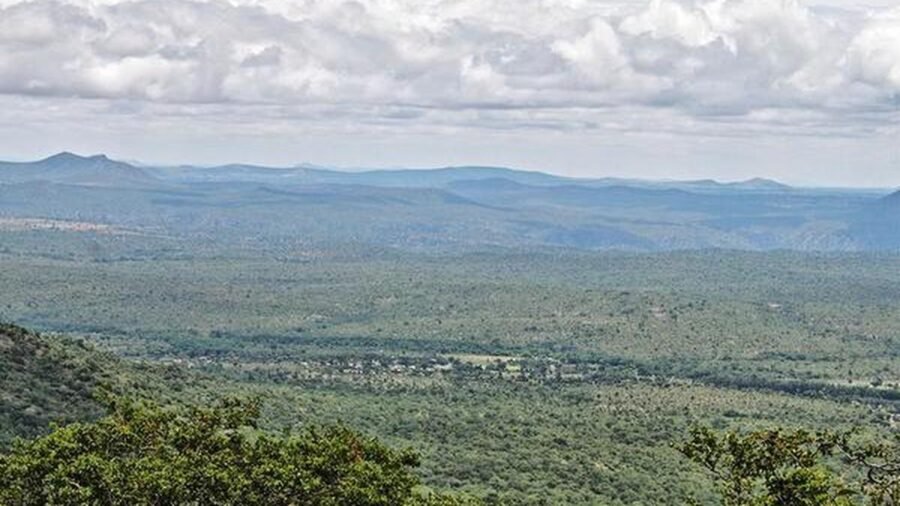
The lack of rains in The Nilgiris this year has brought into focus the impacts of erratic weather to the district’s water security. However, a less visible and more alarming facet of the warming climate in the Western Ghats is its impacts on native forests in the Nilgiri Biosphere Reserve (NBR), with researchers warning of “erratic, unpredictable seasons” leading to widespread mayhem within forest ecosystems.
According to a study titled ‘Mapping forest phenological shift in Nilgiri Biosphere Reserve, Western Ghats: Response to Climate Change,’ published in 2024 in ‘Remote Sensing’, an open access peer-reviewed scientific journal, researchers used satellite imagery to examine forests in the Nilgiri Biosphere Reserve over two decades between the years 2000 and 2020, and how they were responding to changing temperature and rainfall.
Apart from recording an annual increase in temperature across the Nilgiri Biosphere Reserve by 0.01 degrees Celsius every year between 1950 and 2018, they also found the average amount of rainfall decreased by 3.97 millimeters every year during the same period. These changes were having an impact on the four forest types analysed by the researchers.
They mapped the ‘Start of season’, when vegetation in the Nilgiri Biosphere Reserve becomes green, ‘End of Season’, when the active greening of the forests ends and Length of Season, the period between the start and end of the greening season, to try and understand the effects that climate was having on local ecology.
The researchers learned the Start of Season (SOS) had delayed in Phase I of their study between 2001 and 2010 in all four forest types – moist deciduous, dry deciduous, semi evergreen and wet evergreen forests. This led to seasons being shorter for dry deciduous, semi evergreen and wet evergreen forests while the season had lengthened by 4.37 days a year in moist deciduous forests during the same period.
Interestingly, this pattern completely shifted during Phase II of their study, between 2011 and 2020, when the Start of the Season had advanced across the four forest types which led to the duration of the seasons also lengthening.
Bodi Surya Pratap Chandra Kishore, one of the authors of the paper and the current Technical Officer at the School of Planning and Architecture in Bhopal, said the study showed that “the seasonal rhythm of forests in the NBR had changed over the last two decades.”
“In some periods, vegetation started its growing season later; in another period, it started earlier. The end of the growing season also changed differently in different forest types. This means that climate change is not simply making forests ‘greener’ or ‘less green’; it is changing the timing of their biological activity,” he said, adding that the broader message is that climate change can alter when vegetation grows.
“Monitoring these changes can help forest managers identify vulnerable ecosystems and plan conservation and restoration strategies earlier,” he added.
He said while temperature was an important factor, that it was not the only driver dictating the start, end and duration of seasons within the Nilgiri Biosphere Reserve’s forests.
“In ecological systems, the relationship is also unlikely to be purely linear. Temperature interacts with rainfall, soil moisture, drought, photoperiod (amount of light an organism receives in a 24-hour cycle) and other environmental factors. For example, warmer conditions can promote earlier vegetation development when sufficient moisture is available, but warming accompanied by water stress can have the opposite effect,” he said, adding that he expects variability of seasons to increase with climate variability and extreme weather events.
Godwin Vasanth Bosco, a restoration ecologist and founder of Upstream Ecology in The Nilgiris, said the clearest signs of climate change were visible in the cloud forest sections of The Sholas – the high altitude tropical montane forests of the Western Ghats.
“The amount of epiphytes, mosses, ferns and orchids on the trees is visibly drier and steadily lessening season after season. There is a clear yellowing setting into these pocket Sholas, and the microclimate inside them has changed. A Shola is supposed to hold its own weather, that is the whole idea of it; a cool, moist, self contained pocket regardless of what is happening outside [the forest patch]. That is no longer holding true the way it used to. Both the temperature and the moisture levels inside these fragments are different now, and once a shola cannot hold onto its own humidity, it stops being able to support the moisture dependent epiphytic community in it,” he said.
Bosco has also witnessed the unpredictably of seasons firsthand. “Some years bring unusually severe frost [during the winter], and other years, very little. That unpredictability is itself part of the problem. These forest and grassland systems evolved around a fairly narrow and dependable climatic window, and what is changing is not just the average, it is the reliability of that window,” he said.
He adds while the effects are most pronounced in the Shola forests, the dry scrub forests found further down the slopes have also been impacted. “Down in the driest tracts, closer to Thengumarahada, where the land has been taken over by Prosopis juliflora and Lantana camara, the ground this year has stayed bare and parched right through what should have been the growing period. The annual grass cover that would normally come up with the rains simply has not shown up. It is worth sitting with how different that is from what is happening up in the cloud forest, the wet Sholas are losing their epiphyte load at one end of the gradient, and the dry thorn and scrub tracts are failing to green up at all at the other end, and both are being driven by the same underlying warming and rainfall disruption,” he said.
He also stated he noticed Magnolia nilagirica, an endemic species native to the Western Ghats, that usually begins flowering at the end of the monsoon, began to do so as early as the end of June. “The flowering of several endangered endemic grassland plants has also reduced drastically. The scapigerous impatiens endemic to these grasslands, Impatiens clavicornu (Club-spur balsam) among them, have flowered far less than in past years. These are already a narrow range, threatened species. So a weak flowering season is not inconsequential. It means fewer seeds set, a thinner seed bank carried into the next year, and less of a buffer if conditions turn unfavourable again. Conditions like this can genuinely push already endangered species further into risk [of extinction],” he added.
The effects of an erratic and shifting season have huge knock-on effects for the entire ecological system of the Western Ghats, he said, adding that when flowering and fruiting occurs later or earlier than usual that it stops reliably lining up for pollinators, seed dispersers and fruit-eating birds to effectively fulfil their roles in the system.
“A number of these plant pollinator relationships in the Sholas and grasslands are fairly specific, so if a flowering flush is out of step when its pollinators are active, the plant can lose out on effective pollination even in a year when it does flower. The same plays out downstream with fruiting. Animals that time breeding or movement to a fruiting season can find themselves out of sync with the forest, and regeneration slows because fewer viable seeds are produced and dispersed at the right moment. Recent phenology research elsewhere in the Western Ghats has documented similar desynchronisation in flowering trees, so it looks like a broader regional pattern rather than an isolated one. None of this shows up as a single bad year. It builds up quietly as an erosion of the timing that holds the whole forest community together,” he said.