Antrix-Devas deal: Ex-Department of Space officer says secrecy was needed due to US curbs
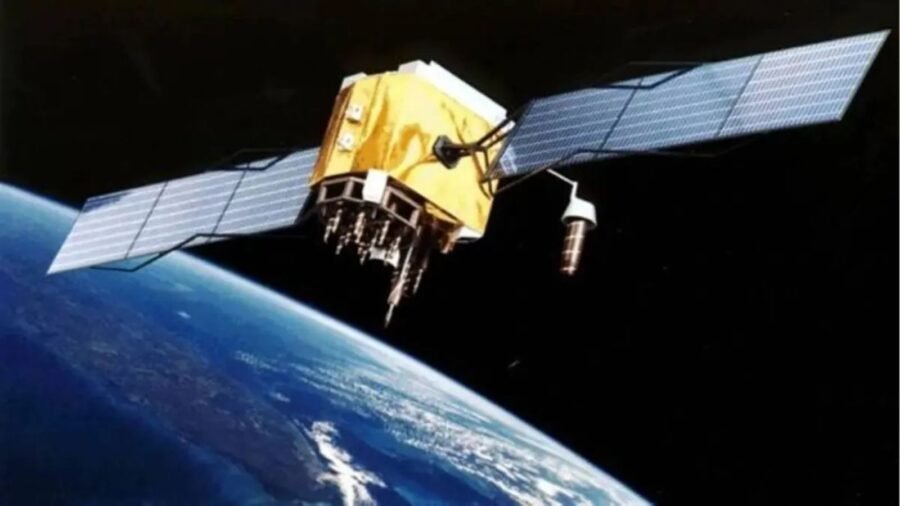
A former additional secretary in the Department of Space who was chargesheeted in March this year, in connection with the failed deal between the ISRO’s Antrix Corp and Devas Multimedia Pvt Ltd, has told the CBI that the deal was part of ISRO attempts to bring new communication technology to India amid technology control regimes put in place by countries like the US – and that this was the primary reason for the secrecy around it.
S K Das, who was also Member, Finance, in the Department of Space, is among the accused in the corruption case along with retired IAS officer R G Nadathur, former ISRO chairman G Madhavan Nair and other ex-ISRO and Devas officials.
In his statement to the CBI, as per sources, Das has said that Antrix, the ISRO’s commercial arm, signed a satellite deal with Devas in 2005 as at that time “India was in urgent need of a technology that would deliver video, multi-media and information services via satellite to mobile receivers in vehicles and mobile phones across the country”.
Of the only three countries that had the technology, South Korea, Japan and the United States, only the US technology was adaptable in India, Das has stated. “However, at that point of time, ISRO was operating under technology control regimes imposed on India by the United States government. That is why ISRO was looking for a service provider in the US who could facilitate ISRO getting access to hybrid digital communication technology without having to go to the US government.”
Das said: “It was with the idea of finding such a service provider in the US that Dr Kasturirangan, the then Chairman of ISRO, led a team to the US in August 2003. I was a member of the team. Before the actual exploration began, Dr Kasturirangan had warned me that this exploration was top secret in nature because of the fact the technology we were trying to get through a service provider was included in the technology regime banned by the US.”
Under the Antrix-Devas deal, ISRO was supposed to lease two communication satellites, GSAT 6 and G A, for 12 years at a cost of Rs 167 crore to Devas Multimedia. The start-up was to provide multimedia services to mobile platforms in India in exchange, using the space band or S-band transponders on the two satellites.
However, the arrangement came to be labelled a “sweetheart deal” in the storm of corruption charges against the Manmohan Singh government, including the 2G scam. In February 2014, the UPA government annulled the Devas-Antrix deal, saying the space spectrum allocated for the satellite services of Devas was needed for security needs.
Story continues below this ad
After the NDA government came to power in 2014, the CBI and Enforcement Directorate stepped up investigations into the deal even as Devas Multimedia and its foreign investors, including German telecom major Deutsche Telekom, approached various international tribunals seeking compensation for the failed deal.
Over the years, they have been awarded compensation by various fora, on the grounds of loss of revenues and investment caused to them, even as the trial against officials of ISRO, Antrix and Devas for allegedly causing loss of “Rs 578 crore” drags on.
Devas has defended the deal as being based on a legally valid agreement with Antrix.
Since March, the trial has been stalled after a CBI Special Court ordered it shifted to Bengaluru, and the Delhi High Court ordered a stay on the CBI’s appeal.
‘Need for secrecy’
Story continues below this ad
Das told the CBI that in 2003, while the NDA was in power at the Centre, ISRO got in touch with US-based space business consultancy firm Forge Advisors LLC (FA), which included in its ranks Indian-origin Ramachandran Vishwanathan (in 2004, he would be one of the founders of Devas). A preliminary agreement was reached with Forge Advisors, and an MoU “signed between Antrix and FA in 2003”, Das said, adding he was part of the negotiations.
On March 17, 2005, Das said he was present when at “the 58th meeting of the Antrix Board”, a contract with Devas for leasing S-band transponders on GSAT 6 for 12 years was announced. He told the CBI that “the background note for this Space Commission meeting mentioned that the Department of Space had already been approached by a service provider who had undertaken to lease the capacity for the life period of the satellite”. “That being the case, I concealed nothing from the Commission.”
However, Das said, the note to the Space Commission and later to the Manmohan Singh Cabinet for its approval did not specify Devas Multimedia as the user of the satellite. “I (was) informed that this had been the practice all along in earlier notes submitted to the Space Commission and the Cabinet for approval if the satellite concerned was an ISRO satellite. However, not indicating the name of the specific user may have also been prompted by the need for keeping the name secret in view of the technology control regimes imposed on India by the US.”
The former additional secretary also defended the financial terms of the lease agreement, at US $9 million per annum with an increase to US $11.25 million per annum when Devas began making profits, as “reasonable”. “Accordingly, I recommended the proposal to the Minister for Finance.”
‘Loss of Rs 578 crore’
Story continues below this ad
In August 2016, the CBI filed its first chargesheet, against eight officials, of Devas, ISRO and Antrix, accusing them of “being party to a criminal conspiracy with an intent to cause undue gain to themselves or others by abusing official positions”, and of causing a loss of “approximately Rs 578 crore” through the 2005 deal.
The eight named by the CBI were former ISRO chairman G Madhavan Nair; former Antrix executive director K R Sridhara Murthi; former ISRO officials Veena Rao and A Bhaskarnarayan; Devas founders Ramachandran Vishwanathan, M G Chandrashekhar (a former ISRO employee) and D Venugopal; and a former ISRO clerical staff, Marike Umesh.
In an additional chargesheet filed in January 2019, the CBI stated that there was no approved technology in the world in January 2005 – when the Devas-Antrix deal was signed – to provide video, multimedia and information services via satellites to handheld devices. “However, as part of (a) criminal conspiracy, Devas Multimedia intentionally made a false claim,” the CBI said.
The ED separately filed a chargesheet, under the Prevention of Money Laundering Act, against five Devas officials.
Story continues below this ad
In 2020, accused Veena Rao filed an application before the CBI Special Court demanding that the agency also investigate ISRO and Department of Space officials aware or complicit in the Antrix-Devas deal.
In September 2025, the Special CBI Court ordered a probe against Das and former joint secretary, Department of Space, R G Nadadur, saying “the entire sequence of events leading to the registration of the present case requires further investigation”.
In the case of Das, the court said, the “Cabinet note wrongly records the fact that ISRO is already in receipt of several firm expressions of interest by service providers for utilization of this satellite capacity on commercial terms, even though there was only one firm Devas… in the agreement with Antrix”.
What happened to Devas
In September 2015, Devas was awarded $1.2 billion as compensation by the International Chamber of Commerce (ICC) to be paid by Antrix Corp, while Deutsche Telekom was awarded $101 million compensation by the Permanent Court of Arbitration in Geneva, and the Mauritius investors in Devas awarded US $111 million by UNCITRAL (the United Nations Commission on International Law).
Story continues below this ad
In May 2021, the National Company Law Tribunal in India ordered the liquidation of Devas, “citing fraudulence” in its creation. The NCLT order was upheld by the Supreme Court on January 17, 2022.
In 2023, the Delhi High Court set aside the ICC arbitration award.
On August 12, 2026, the US Court of Appeals for the Ninth Circuit upheld an order of a US district court awarding compensation of $565.2 million (now over $1.2 billion with interest) to Devas over the 2005 deal.


Scientists develop new way to tackle key quantum computing challenge
By Sohail Khan · 15 Sep
Xi, Modi reached ‘most important consensus’ that India, China should be partners: Wang Yi
By Sohail Khan · 15 Sep