After CAG flags E. Coli in drinking water, Railways announces major upgrade at 20,000 locations
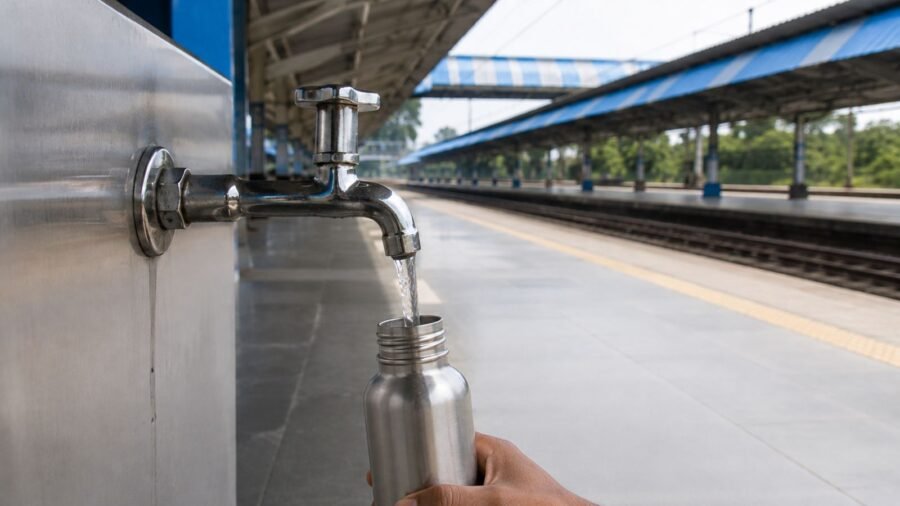
CAG flags E. Coli in drinking water at railway stations: Following the Comptroller and Auditor General (CAG) report on drinking water quality, the Ministry of Railways on Sunday announced a series of measures to ensure safe drinking water for passengers, including the installation of new water filtration systems at around 20,000 locations across the railway network.
Chairing a high-level meeting at Rail Bhavan, Railway Minister Ashwini Vaishnaw reviewed the drinking water quality situation across the railway network and directed officials to take immediate corrective measures to ensure safe drinking water for passengers.
According to the national transporter, the “Tank to Tap” water filtration and monitoring system will be installed at around 20,000 locations, including water coolers, across the railway network. It will also replace old water tanks and ensure regular water quality testing at source and outlet points.
Apart from these measures, Railways will also introduce centralised monitoring to track water quality and ensure accountability. Water storage tanks will also be cleaned and maintained at regular intervals.
The Railway Board will directly oversee the implementation, while water quality and progress reports will be published periodically to ensure transparency.
CAG report on drinking water quality at railway stations
In a recent report titled ‘Passenger Amenities and Sanitation at Non-Suburban Railway Stations in Indian Railways’, the CAG said E. coli bacteria was detected in drinking water samples collected from eight out of 49 railway stations. The affected stations included several in Mumbai, while other cases were reported in Kerala, Tamil Nadu and Jharkhand.
“Inspection of the water supply systems was not carried out as per prescribed periodicity. There was shortfall in testing of drinking water for residual chlorine, bacteriological analysis and chemical analysis. Low/high level of chlorine in drinking water, presence of total coliforms bacteria (including E-coli bacteria) as well as deficiencies in parameters tested indicated unsatisfactory quality of drinking water at stations. Tests prescribed in the ‘Uniform Drinking Water Quality protocol’ were not carried out for several parameters,” the report said.
Story continues below this ad
In its recommendations, the auditor asked Indian Railways to strictly follow prescribed protocols for inspecting water supply systems and testing drinking water quality. It also recommended comprehensive water testing covering all parameters under the Uniform Drinking Water Quality Protocol.

‘Matter between them’: Centre steps away from Hindu group-Eiffel Tower row
By Sohail Khan · 8 Sep
’24 hours’: Protesting Kashmir medical interns get show-cause notice
By Sohail Khan · 8 Sep
Tour guide stabbed to death near Jaipur’s Amer Fort
By Sohail Khan · 8 Sep