A poet, a freedom activist, a killing: 36 years on, Kashmiri Pandit family awaits justice
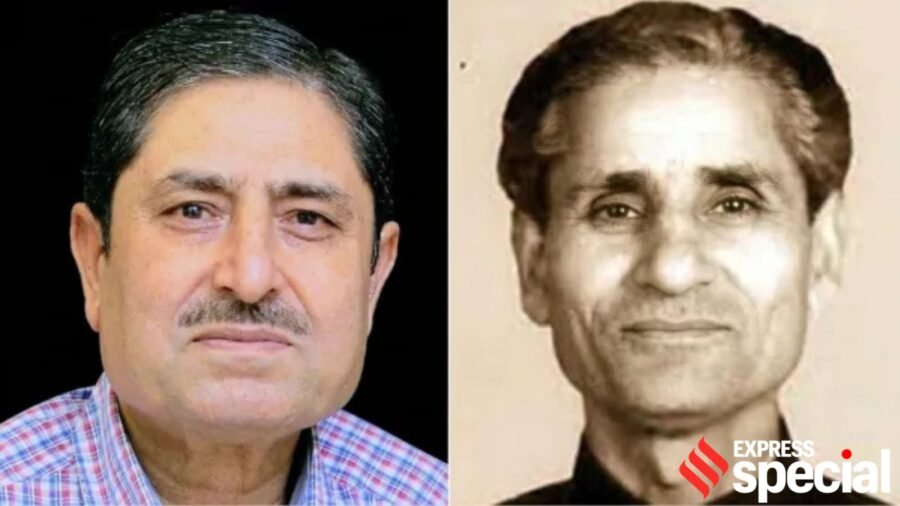
When Kashmiri Pandit poet, journalist, and freedom activist Sarwanand Koul “Premi” was abducted and killed on the night of April 30, 1990, along with his 27-year-old son, his family did the only thing they could think of: move out of their beloved home in Kokernag, Anantnag. It was a sombre procession — his wife, eldest son and his wife, a daughter, his widowed daughter-in-law, and three grandchildren — all set out to live in a single room at the Jammu MLA Hostel under a watchful police escort.
“You can well imagine our plight,” says Premi’s now 70-year-old son Rajinder. “Eight people used to a palatial multi-storeyed house, sharing a single room with other relatives from Kashmir, all as frightened as pigeons.”
Since then, Sarwanand’s older son Rajinder has been pursuing a long legal battle connected with the abduction and killing of his father and brother, Virender Koul. This week, that push appeared to have borne some fruit: the State Investigation Agency conducted searches at nine locations across J&K, marking the launch of fresh investigations into the two killings.
The raids were part of a wider move by the SIA to officially revive high-profile cold cases involving the targeted killings of Kashmiri Pandits during the peak of militancy in 1990.
For families like the Kouls, this marks the beginning of some closure from the scars they have borne during this period.
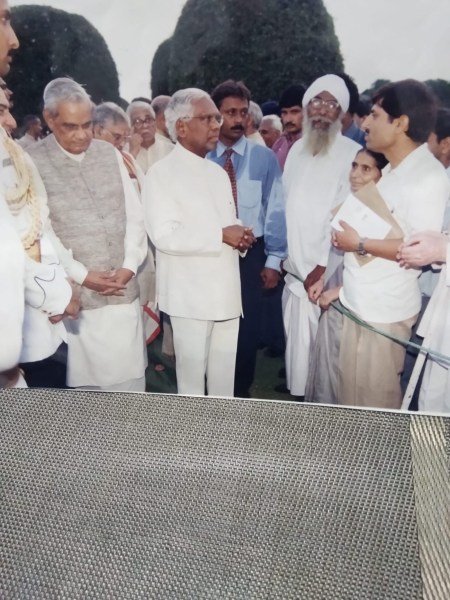 Rajinder Koul along with his mother meeting central leaders in New Delhi after the killing of his father, Sarwanand Koul Premi, by militants in Kashmir.
“My mother used to say that all those politicians from J&K and Delhi who visited my father for blessings and guidance stopped coming to see us. The then governments at the Centre and in J&K made numerous promises of land, compensation and a CBI inquiry into the killings, but none of them bore any fruit,” says Rajinder Koul.
The abduction and the aftermath
A Gandhian who was part of the Indian freedom movement, Koul was among the handful of Kashmiri Pandits whose families were left behind in the Valley during the militancy.
Story continues below this ad
The family had been well off, owning two houses in Anantnag. Koul had three sons and four daughters.
“We had an old multi-storeyed home in Anantnag and a bungalow,” says Rajinder. “Within five days of the murder, we collected the mortal remains and moved to Jammu.”
Even before the killing, the family had already been discussing leaving. But Koul wouldn’t hear of it.
“He thought it would be a betrayal to his people at a time of crisis,” Rajinder says.
Story continues below this ad
That changed on the night of April 29, when armed militants forced their way into the family home and dragged Koul and his son Virender out of bed and into the streets, allegedly also looting the family’s valuables. Two days later, their bodies were found hanging from a tree in a forest some 20 km away, allegedly bearing broken bones and marks of torture.
The family knew then that it was time to leave. Without even finishing their father’s final rites, the family – including Virender’s widow and toddler daughter – left Anantnag, securing a room at the MLA Hostel in Jammu with the help of then J&K Governor Jagmohan, a friend of Koul’s. There, their first guest was BJP leader Chaman Lal Gupta.
“He brought us two bedsheets, 3-4 steel plates and a two-litre bottle of mustard oil,” Rajinder says. “We thanked him for his gesture but asked him to give those items to someone who needed them.”
From there, the family moved to Delhi, where Koul’s youngest son Ravinder worked in the Kashmir section of All India Radio as a ‘functional officer’ selected through the Union Public Service Commission. “It was my mother’s wish to have all the family under one roof,” he says.
Story continues below this ad
In the national capital, a stream of leaders visited – Atal Behari Vajpayee, who would go on to become prime minister, and other BJP leaders such as Kedar Nath Sahni, Yashwant Singh, and Madan Lal Khurana. But what the family found most hurtful was that Kashmir leader Mufti Mohammad Sayeed, their father’s student at a school in Anantnag’s Bijbehara, who was then the Union Home Minister, was not among them.
“He didn’t come even though we lived 2–3 km from his office,” he says. “In 1998, then J&K Chief Minister Farooq Abdullah visited us but didn’t hand over the inquiry into the killing to the CBI. Even Mufti, who initially promised action, gave us the cold shoulder later.”
The family has yet to visit their ancestral home, abandoned all those years ago.
“My mother died in 2017 but never went back to Kashmir. I urged her many times to undertake a pilgrimage to Mata Kheer Bhawani [Ganderbal] and Shankaracharya temple [overlooking the Dal Lake in Srinagar], but she never agreed,” Rajinder says. “I went back to Kashmir in 2024 to read a paper in Kulgam on the contributions of my father to Kashmiri literature and India’s freedom struggle. But I could never quite muster the courage to go to Anantnag.”
Story continues below this ad
But even in times of strife, some memories endure, such as the help that came when the family was fleeing.
“A Muslim chemist in Ramban provided medicines and drinking water to my mother, sister and sister-in-law when they felt faint after not having eaten anything since my brother’s death,” he says. “I will visit him to convey my gratitude if I ever happen to pass through Ramban.”

Put up in resorts, Congress’s Jaipur candidates leave for home over ‘lack of rooms, food’
By Sohail Khan · 14 Sep
Former Chhattisgarh chief minister Baghel’s OSD held in exam irregularities case
By Sohail Khan · 14 Sep
Assam railway network now 100% electrified: What it means for train passengers
By Sohail Khan · 14 Sep