A place for Onam at Delhi table and in its heart
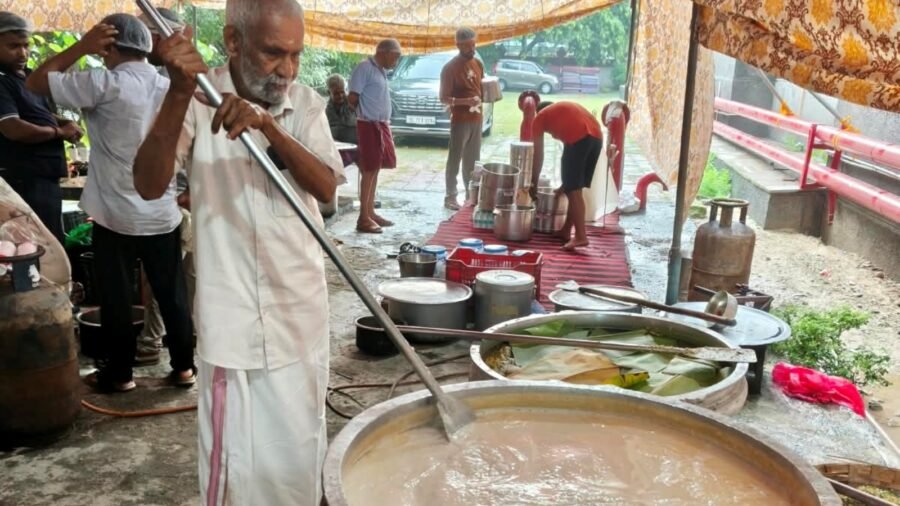
In 2014, I happened to be in Kerala for work during Onam. I did not know much about the festival then, and certainly did not know what awaited me when friends took me to a home in the neighbourhood for lunch. A banana leaf was laid before me, glossy green and still wet from a rinse. Then came the food, ladled and spooned onto the leaf: Avial, olan, thoran, pachadi, pickles and curries sat next to warm rice. My friends guided me through what remains one of my most memorable meals.
And now, come Onam, the banana leaf becomes a familiar sight across Delhi. Restaurants prepare for packed sittings, home chefs open their kitchens, and WhatsApp groups begin exchanging recommendations on where to find the best sadhya. Malayalis celebrating the festival are naturally at the heart of it, but around the tables are also north Indian families, young diners who discovered the feast on Instagram, and food enthusiasts who have learnt to book well in advance. And then there is the trusted route into any regional cuisine, those incredible friends who know exactly where to eat a good sadhya.
Advertisement
The scale is no longer anecdotal. In 2025, Kerala House in New Delhi planned to serve sadhya to approximately 3,000 people over three days, or 800 to 900 people a day. Across Delhi-NCR in 2026, food guides listed at least 20 restaurants offering special Onam sadhyas, with spreads running to 20 or 30 preparations. A few years ago, Thomas Fenn, the co-founder of Mahabelly in Saket, told (‘Onam approaching, Delhi’s restaurants and home chefs prepare to roll out sadhya spread’, August 29, 2022) that it was serving 350 to 400 festive meals a day.
Sadhya’s popularity also tells a longer story about Delhi’s relationship with food from southern India. That relationship did not begin with the current crop of restaurants. Andhra Bhavan’s canteen has been serving diners since 1991. The snaking lines outside it have been a familiar Delhi sight for years. Karnataka Food Centre in RK Puram has long had its weekend queues, while Kerala House’s Samridhi canteen, operating since 2013, was serving 200 to 250 lunches on an ordinary day by 2019.
The change is also visible in how Delhi talks about food from the south. For years, idli, dosa, vada and sambar dominated the menu and the popular imagination. Now the city’s appetite has widened. Appam, puttu, kothu parotta, gongura, pesarattu, bisi bele bath or Mangalorean ghee roast are increasingly familiar. Even idli and dosa are no longer seen as one standard dish, with diners recognising different styles and regional variations.
Advertisement
Sadhya is particularly good at opening that door because it refuses easy abbreviation. A single banana leaf can hold 20 to 30 preparations, bringing together different vegetables, grains, curries and payasams.
Sadhya also brings people closer to the festival. Chef Marina Balakrishnan has described it as being “beyond food”, referring to the families and communities that come together around the meal. In Delhi, this extends beyond the Malayali community. For many diners, sadhya becomes their introduction to Onam, the story of Mahabali, the pookkalam, the banana leaf and the tradition of eating together.
Delhi already understands this way of entering another community’s celebration. Durga Puja draws people who plan their pandal visits around Bengali food. Ramzan evenings send diners towards the old city’s kebabs, breads and sweets. Onam is finding its own place in this shared festive calendar.
Food historian K T Achaya traced how what Indians eat carries histories of travel, trade and cultural exchange. Anthropologist Claude Lévi-Strauss saw food as a language through which societies express themselves. As a city discovers new food, it also begins to understand where it comes from, the traditions around it and the people who have carried it with them. I arrived at my first sadhya in Kerala without knowing what would land on the banana leaf. Today, thousands in Delhi seek out that leaf every Onam. In learning another region’s food, a city also learns about the people who call it home.
Hussain is a chef and author

Letters to The Editor — September 26, 2026
By Sohail Khan · 25 Sep
Revisiting India’s nuclear doctrine without revising it
By Sohail Khan · 25 Sep
The case for accountable lottery regulation in India
By Sohail Khan · 25 Sep